The Water Table Is Worse Than You Think
Twenty-one of the world's thirty-seven major aquifers are in measurable distress. Hundreds of cities are 100% groundwater dependent with no surface backup. Aquifers are dropping faster than any time in recorded history, and salt contamination is migrating into freshwater zones across the arid world. This is not a future problem. This is now.
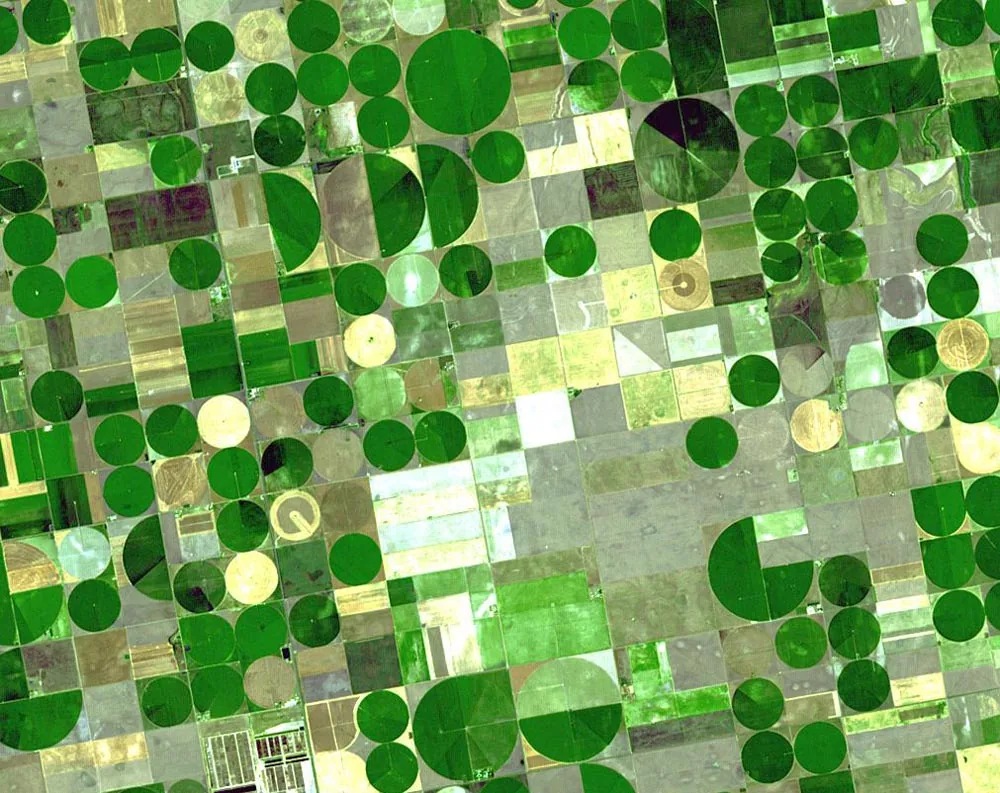
Aquifers Under Stress — The Numbers
Major world aquifers in distress
21 of 37 — half the planet's primary groundwater
NASA GRACE satellites
Ogallala Aquifer (High Plains, US)
Dropping ~1-3 ft/year in heavy-pump regions
USGS
Lake Mead capacity
Below 35% — historic lows
Bureau of Reclamation
Colorado River flow
Down ~20% since 2000 (25-year megadrought)
USGS
Indo-Gangetic Basin (India/Pakistan)
Among the fastest-depleting aquifers on Earth — water for 600M+ people
NASA GRACE / World Bank
Global groundwater pumping rate
Exceeds natural recharge in most arid basins
UN World Water Report
Depletion acceleration
Rate of decline has roughly doubled since 2000
Nature (2024)
Salt intrusion (coastal + arid SW)
Migrating into freshwater aquifers worldwide
Nature Geoscience
The Physics — What's Actually in the Air
12,500 gallons/day
vapor passing over 10K sq ft daily
58°F (need to cool from 100°F to 42°F)
gap to condensation at 100°F/10% RH
3.5 L/kg/day
MOF extraction rate (2025) — no dew point needed
“The water IS there. 12,500 gallons blow over your property every day. The problem is the dew point — no passive surface can bridge a 58-degree gap. But sorbent materials don't need to reach the dew point.”

Cities at the Edge — A Global Picture
Every city on this list thought their water supply was permanent. None of them saw it coming until it was too late.
Cape Town, South Africa (4.7M)
Day Zero (2018) — nearly ran out of water entirely
Timeline: Recurring
Chennai, India (11M)
All 4 reservoirs hit zero (2019)
Timeline: Annual cycle
Mexico City, Mexico (22M)
Sinking 20 inches/year — pumping out its own foundation
Timeline: 2030s
São Paulo, Brazil (22M)
Cantareira system hit 5% (2015)
Timeline: Recurring
Central Valley, USA (Ag basin)
Land subsidence 2 ft/year — aquifer compacting permanently
Timeline: Irreversible
Sanaa, Yemen (4M)
Projected first major capital to exhaust groundwater
Timeline: ~2030
Baghdad, Iraq (8.1M)
Tigris-Euphrates flow down 40% from Turkish dams + climate
Timeline: 2040s
Phoenix, USA (1.6M)
Colorado River allocation cuts, groundwater backstop already constrained
Timeline: 2030s
“The answer has existed for 2,000 years.”
What Desert Civilizations Knew
Every civilization on this list survived in conditions equal to or worse than today's driest modern cities. Several of their systems still function today. The answer is the same as it was 2,000 years ago: capture every drop, waste nothing, store underground, move by gravity.
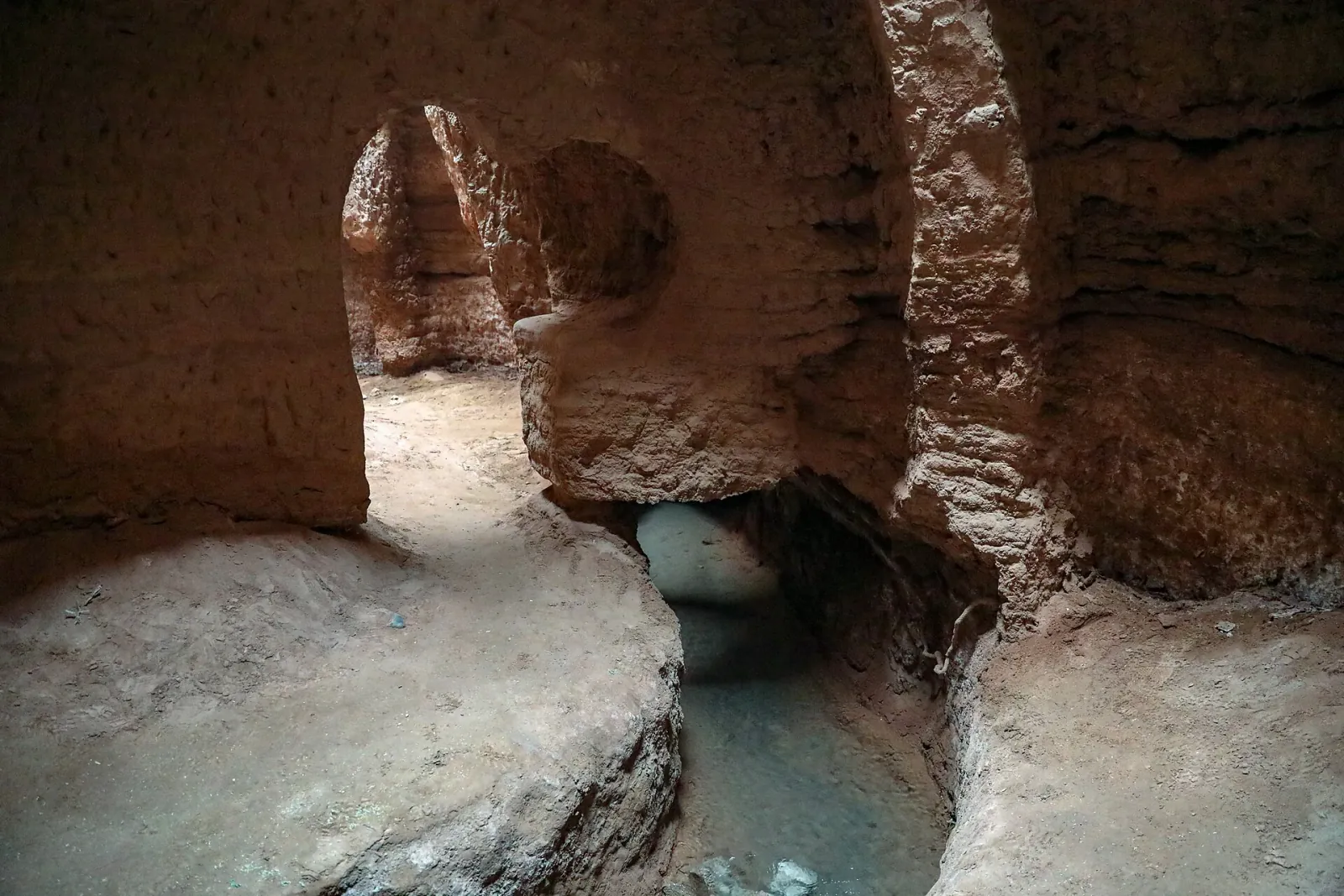
The Universal Pattern
1
Capture Every Drop
2
Waste Nothing
3
Store Underground
4
Move by Gravity
Every successful desert civilization independently converged on this same 4-step protocol. No exceptions in the archaeological record.
The Layered Strategy
Start at the center — passive, free, ancient. Work outward only as needed. Each layer compounds the one before it. Most families will never need Layer 4.

Layer 1: Conserve
Biochar from Pecan Shells
Pyrolyzed nut shells and crop residue become a soil amendment that doubles water retention. Free feedstock from orchards and farms worldwide — pecan, almond, walnut, coconut husk, and rice hull all work.
Local tip: Any nut- or grain-growing region generates shell/husk waste that is typically free for the asking — pecan, almond, coconut coir, and rice husk all pyrolyze into excellent biochar.
Ollas (Buried Clay Pots)
Unglazed terracotta pots buried next to plant roots. Water seeps through the clay walls directly into the root zone — zero evaporation loss. Used across the ancient Southwest for millennia.
Local tip: Local potters across the arid Southwest and Latin America still make ollas. The clay IS the technology.
Sunken / Waffle Gardens
Grid of 6-12 inch deep basins separated by earthen walls. Water pools in sunken cells, protected from wind and sun. Zuni tradition, still practiced today.
Local tip: Zuni Pueblo in western New Mexico has used this for 1,000+ years in arid climate. Practiced today across the Southwest and Andes.
Deep Mulch (6-12 inches)
Thick layer of organic material over soil. Blocks direct sunlight, insulates soil temperature, prevents crust formation. In desert conditions, this is the single highest-impact free intervention.
Local tip: Many municipal utilities and arborists give away free wood chips from tree trimming. Call your local utility or check ChipDrop.
Trinchera Check Dams
Stone terraces built across slopes that capture flash flood runoff, slow erosion, and recharge groundwater. Cuenca Los Ojos in northern Chihuahua has restored thousands of acres and revived dead springs using this method.
Local tip: TRINCHERA = 96 = KNOWLEDGE. The ancient dam IS knowledge, numerically confirmed.
Layer 2: Capture
Rooftop Rainwater Harvesting
A 2,000 sq ft roof captures roughly 12,000+ gallons a year from moderate seasonal rainfall — wherever your wet season falls. First-flush diverter removes dust, gutter filters catch debris, water stores in tank.
Local tip: Most US states allow residential rainwater harvesting without permit (NM, AZ, TX explicitly encourage it). Check local code — a few states still restrict it.
Underground Cistern
A 2,500-5,000 gallon buried tank stores monsoon capture for year-round use. Underground = no evaporation, no algae, no freezing. Ancient method, modern materials.
Local tip: Nabataean cisterns lasted 2,000 years. Modern poly tanks last 25-50.
Greywater Recycling
Shower, sink, and laundry water redirected to landscape irrigation. A household of 4-5 produces 40-60 gallons per day of reusable greywater.
Local tip: Many states permit small-scale greywater systems without permit (NM ≤250 gal/day, AZ ≤400, CA ≤250). Check local code.
Swales and Berms
Contour trenches on a slight grade that capture and slow runoff. 1 inch of monsoon rain on a quarter acre = 6,800 gallons that otherwise runs off your property and is gone.
Local tip: SWALE = 60 = PETRA. The capture method and the capture city share gematria.
Groasis Waterboxx
Dutch invention. Polypropylene bucket with a lotus-effect superhydrophobic lid that collects nighttime dew and light rain, funnels it to a single plant's roots. Tested in Morocco (similar climate): 90% tree survival vs 10% without.
Local tip: This is how you establish a food forest in arid regions with almost no water input.
Layer 3: Extract
MOF Sorbent Harvesters
Metal-organic frameworks chemically trap water molecules directly from air at humidity as low as 10% — they don't need to reach the dew point. Solar heat releases the water. Omar Yaghi (UC Berkeley) won the 2025 Nobel Prize for this work.
MOF = 34 = F(9). The technology IS Fibonacci.
SOURCE Hydropanels
Solar-powered panels that extract water from air using hygroscopic materials and solar thermal energy. Already deployed on Navajo Nation and in 50+ countries. Works in desert conditions.
Proven, commercially available NOW. Deployed on Navajo Nation.
Radiative Cooling Panels
Engineered surfaces that cool 18-25°F below ambient temperature by radiating heat to the cold sky. During humid seasons when humidity hits 40-60% and nighttime dew points rise to 50-60°F, these CAN reach the dew point and produce real condensation.
Works best exactly when arid-region monsoon humidity is highest. Seasonal alignment with the wettest window of the year.
WAVR Technologies
UNLV spin-off (H. Jeremy Cho). Works at 10% humidity using novel thermodynamic cycle. $4M seed funding (2025). Actively seeking pilot sites in extreme arid regions.
Designed specifically for extreme arid conditions. Needs sites, not labs.
Brackish Water Reverse Osmosis
When fresh aquifers go salty (a common end-stage of over-pumping in arid regions), home-scale RO systems can desalinate brackish groundwater. The US Bureau of Reclamation operates the Brackish Groundwater National Desalination Research Facility in Alamogordo, NM — a global reference site.
The backup plan. When fresh groundwater is gone, this keeps wells usable.
Layer 4: Power
Geothermal-Powered Desalination
Geothermal energy surplus (Lightning Dock, Animas Valley) powers desalination that's otherwise too energy-intensive. Geothermal runs 24/7/365 — unlike solar. This is the engine that makes water extraction economically viable when the aquifer goes brackish.
Energy independence IS water independence. The Sovereign Spine isn't just about energy — it's the engine that makes water viable.
Solar-Powered Active AWG
At scale, solar arrays power refrigeration-based AWG or enhanced sorbent cycling. Requires significant energy input, but most arid regions get 300-350+ days of sunshine annually. Energy surplus turns passive extraction into active production.
The same intense sunshine that creates aridity also makes these regions solar powerhouses. Aridity and abundance are two sides of the same physics.
Geothermal Greenhouse Integration
Geothermal heat powers greenhouses that create their own humid microclimate. Plants transpire, humidity rises inside, condensation is captured and recycled. Lightning Dock already operates NM's largest geothermal aquaculture facility.
The food pillar and water pillar become one system. Geothermal heat → greenhouse → humidity → condensation → irrigation → repeat.
The Science That Changes Everything
MOF sorbent materials don't need to reach the dew point. They chemically trap water molecules directly from air at humidity as low as 10%. Solar heat releases it. The trajectory from 2017 to 2025 is the game changer — and Omar Yaghi won the 2025 Nobel Prize for this work.
MOF Performance TrajectoryMOF = 34 = F(9)
35× improvement in 8 years. If this trajectory holds, household-scale water independence from air becomes viable by 2030.
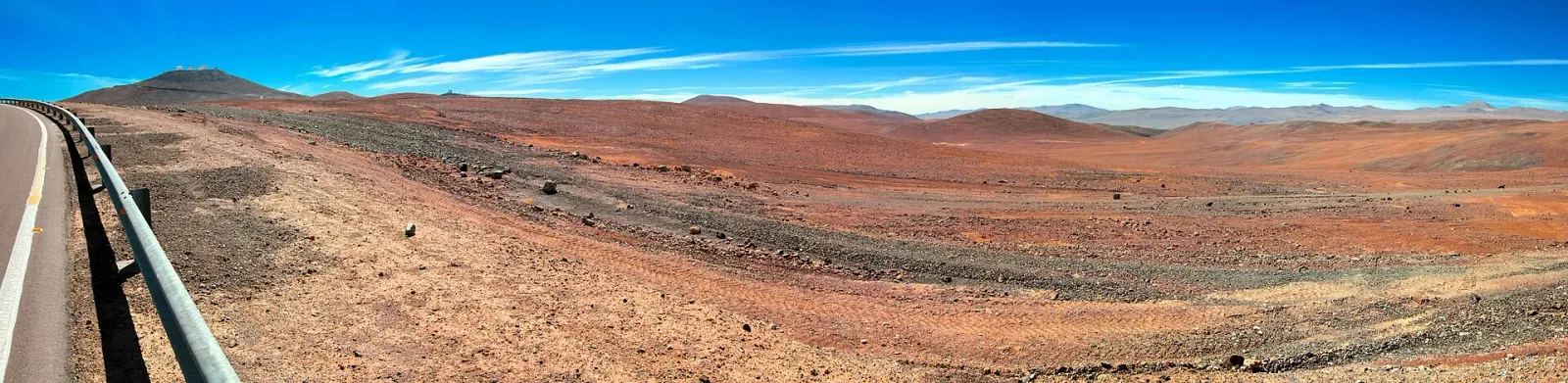
The Dew Point Problem (and How to Bypass It)
Ambient Temperature
100°F
Required Dew Point
42°F
Gap
58°F
No passive surface bridges this
Passive condensation requires cooling a surface below the dew point. At 100°F and 10% RH, that means getting to 42°F. In the desert. With no electricity. It doesn't work.
MOF sorbents bypass the dew point entirely. They use chemical affinity, not temperature differential. The framework's pore geometry is tuned to grab H₂O molecules at any humidity. Solar heat releases the captured water.
Radiative cooling works during humid seasons when humidity hits 40-60% and the dew point rises to 50-60°F. Engineered surfaces that cool 18-25°F below ambient CAN reach it. Seasonal, but in any monsoon or coastal-humid climate the window is real.
Research & Innovation Hubs (Southwestern US examples)
Every arid region has equivalents. These illustrate how federal labs, universities, and state collaborations accelerate water science.
Brackish Groundwater National Desalination Research Facility
Alamogordo, NM · Federal
Largest desalination research facility in the US (Bureau of Reclamation). Open to global researchers.
NMSU Water Resources Research Institute
New Mexico State University · University
Rio Grande basin management, groundwater research, desalination R&D
SWSIE (Southwest Sustainability Innovation Engine)
ASU / UNLV / U of Utah · Multi-state
$15M NSF initiative — WAVR Technologies is the first commercial spinout
Lightning Dock Geothermal
Animas Valley, NM · Industrial
Most productive pumped geothermal well in the US. 200+ MWth.
The Pattern
Energy independence enables water independence. Water independence enables food independence. Food independence enables community resilience. The pillars reinforce each other. This is not speculation — it's the same architecture every successful desert civilization built.
The Self-Reinforcing Triangle
Energy
Geothermal + Solar
Water
AWG + Desal + Capture
Food
Greenhouse + Food Forest
Energy powers water extraction. Water enables food production. Food sustains community. Community funds energy. The loop closes.

Sacred Mathematics Confirmation
AQUIFER = BOLSON = 77
The aquifer and its geologic name are one
DESERT = 71
The arid root — gematric singular
MOF = F(9) = 34
The key technology IS Fibonacci
PASSIVE = EXTRACT = 91
Passive extraction = same value
SWALE = PETRA = 60
Capture method = capture city
TRINCHERA = KNOWLEDGE = 96
The ancient dam IS knowledge
PASSIVE(91) = EXTRACT(91) = RIVERS(91). The passive extraction of water and the rivers that once carried it share the same gematric value. The universe is not being subtle.
Global Applicability
This layered strategy — conservation first, capture second, extraction third, energy-powered fourth — works everywhere. The specific techniques change (fog nets on the Chilean coast, stepwells in Rajasthan, trincheras in Chihuahua) but the architecture is universal. Start passive. Work outward only as needed.
Sahel (Africa)
Zai pits + sand dams + solar desal
400M+ at risk
Middle East / Central Asia
Qanat revival + MOF harvesters + brackish RO
300M+ at risk
American Southwest
Trincheras + monsoon capture + geothermal desal
60M+ dependent on Colorado River

“A family should have the same capability as a municipality to secure their own water.”
The technology exists. The ancient wisdom is proven. The only question is whether we build it before the aquifer runs out.
UET-NET Library · Water From Air Exhibit · Research compiled from NMSU, USGS, Bureau of Reclamation, MIT, UC Berkeley, and field archaeology
WATER(67) · AQUIFER(77) = BOLSON(77) · DESERT(71) · MOF(34) = F(9) · PASSIVE(91) = EXTRACT(91) = RIVERS(91)