
The Sun Stone
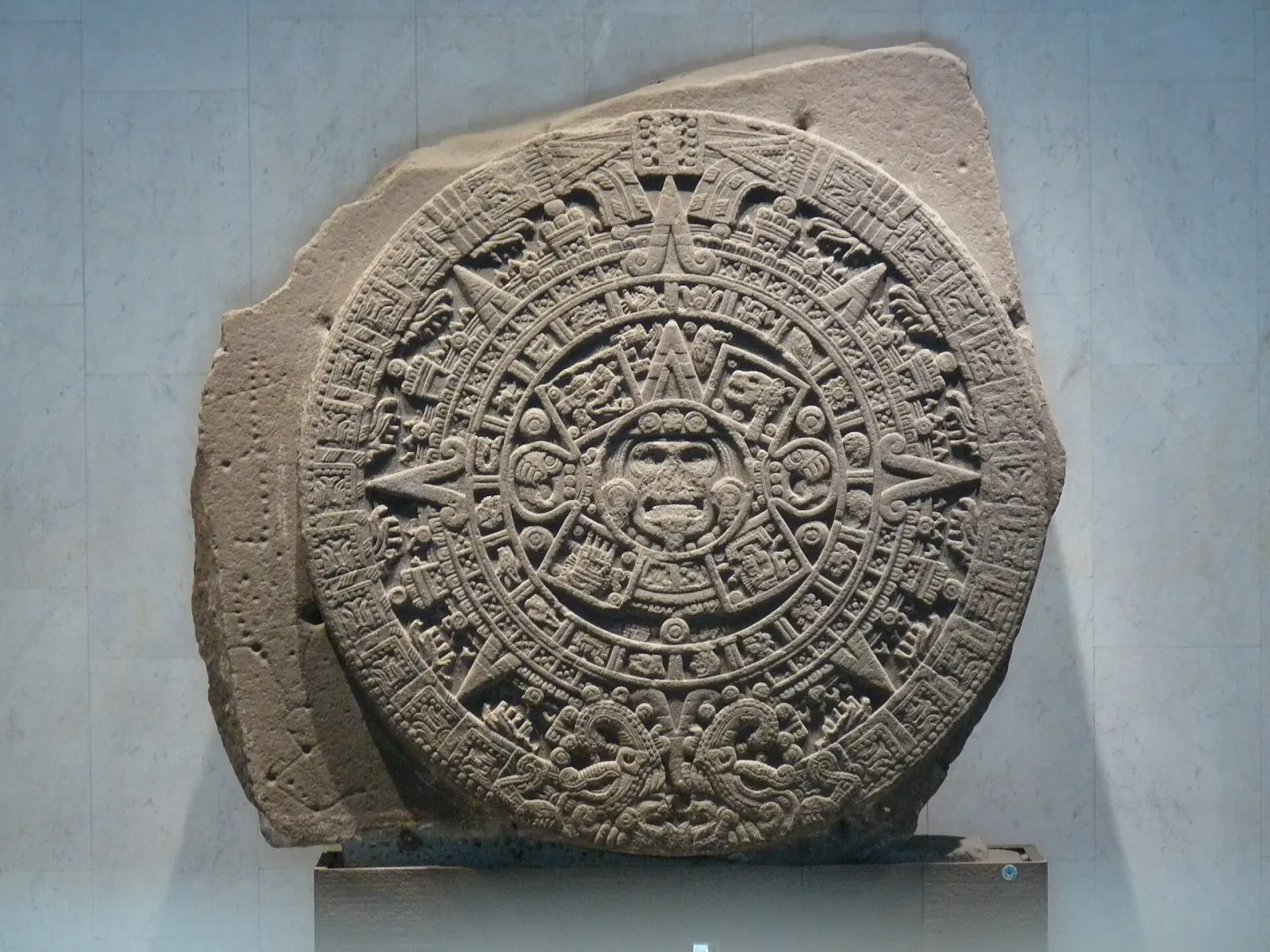
The most reproduced object in Mexico is called a calendar, and it is not one. It cannot be read to find a date. It is a monument about time — four dead worlds boxed around the living one.
The Sun Stone was found face down under the Zócalo on December 17, 1790, by workers paving the plaza, and it has been misnamed since a study published two years later. What is carved on it is the Mexica account of cosmic history: four prior worlds, each named for the day it was destroyed — 4 Jaguar, 4 Wind, 4 Fire-rain, 4 Water — around the fifth, 4 Movement, which is this one. The ring of twenty day-signs says which system they counted by; nothing on the stone lets you count with it. Read correctly it is a position statement about impermanence, a people locating themselves as the fifth attempt in full knowledge that four had failed. The Library files it beside the Trent sequence cull and the church modes rather than beside the instruments: a record of how an institution told time to itself. And the name matters, because it merges the Mexica into the Maya Long Count story — 2012 and the baktun — which is centuries earlier, hundreds of miles away, and not theirs.
- León y Gama, Descripción histórica y cronológica de las dos piedras (1792) — the first study, two years after the find
- Leyenda de los Soles (Codex Chimalpopoca) — the Five Suns account
- Sahagún, Florentine Codex (1577)
- Museo Nacional de Antropología, object record — dimensions and provenance