Six Ways to Seek Meaning
The I Ching, Ifá, the runes, tarot, the 260-day count and the yantra, as their own traditions keep them
Six ways people have sought meaning
The Innerverse carries six systems. They come from China, Yorubaland, the Germanic world, Renaissance Italy, Mesoamerica and India, and they are not all the same kind of thing. Three are oracles in their own traditions: the I Ching, Ifá and the daykeepers' 260-day count. Tarot began as a card game and became an oracle in the eighteenth century. The runes were an alphabet, and casting them is a modern practice. The yantra is not cast at all: it is worshipped and meditated on.
Each tab describes one system in its own terms: what its keepers say it is, how it is used, and what the documented record shows about where it came from. Where the record and the popular story differ, the page gives both.
What this exhibit does not do
It does not rule on whether any oracle foretells anything. Nothing here has been tested for that, and the Library does not pretend otherwise in either direction. The differences between the six are as instructive as the likenesses: a culture's oracle shows what it thought was worth asking, and who it trusted to answer.
- From
- China
- Unit
- Six lines, each whole (yang) or broken (yin)
- Set
- 64 hexagrams
- Cast with
- Fifty yarrow stalks; later, three coins
- Text
- The Zhouyi, with the Ten Wings commentaries
The book
The Zhouyi pairs each of 64 hexagrams with a name, a judgment and a statement for each line. Its core is usually placed around 3,000 years ago, with layers added over the following centuries (Adler, 2022). The Ten Wings commentaries came later; tradition credits them to Confucius, and modern scholarship dates them to the Warring States and early Han. They turned a diviner's manual into one of the Five Classics.
The oldest hexagram-like inscriptions, on Shang and early Zhou bronzes and bones, are written as numbers, mostly 1, 5, 6, 7 and 8, not as whole and broken lines (Zhang Zhenglang, 1980). A silk copy buried at Mawangdui in 168 BCE orders the hexagrams differently from the received book.
The cast
The oldest described method sorts fifty yarrow stalks, one line at a time, six times; a later method throws three coins. Each line comes out as one of four values, 6, 7, 8 or 9: young or old, yin or yang. The received text still names lines by them (“Nine in the second place”). Old lines are “changing,” so a single cast can read as a movement from one hexagram to a second.
- From
- Yorubaland: Nigeria, Benin, Togo; and the Atlantic diaspora
- Unit
- A single or a double mark
- Set
- 16 principal Odù; 256 in all
- Cast with
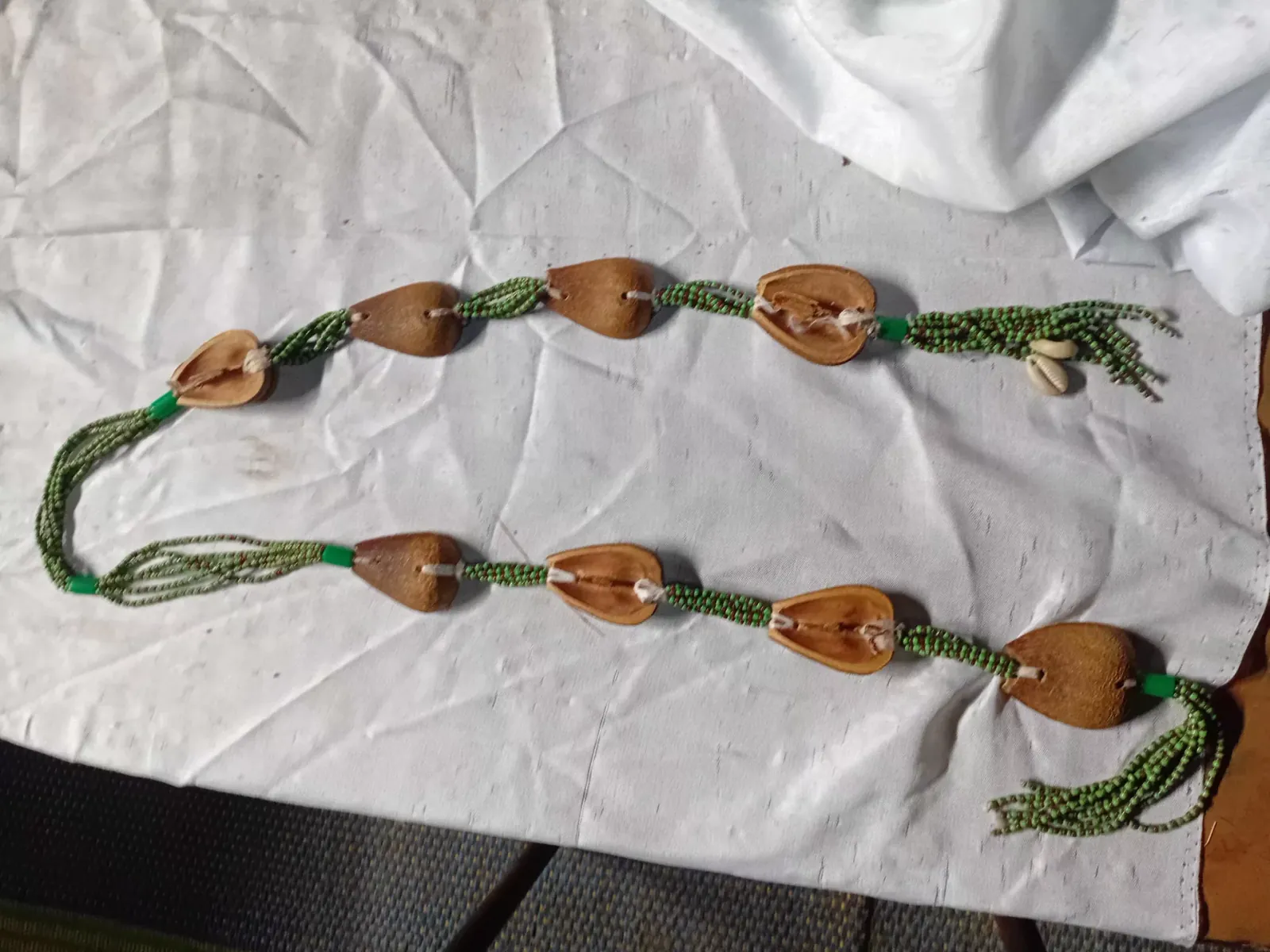
- Sixteen palm nuts (ikin), or a chain of eight half seed shells (ọ̀pẹ̀lẹ̀)
- Text
- Verses (ẹsẹ Ifá) held in memory, about 800 per Odù by UNESCO’s count
Ifá, as its keepers describe it
Ifá is the divination system of the Yoruba and the body of knowledge carried with it. Its patron is Ọ̀rúnmìlà, called Ẹlẹ́rìí ìpín, the witness to the choice of destiny. Its priests, the babaláwo, “fathers of secrets,” train for years to learn the verses by heart. The same system is practiced as Fa among the Fon and Afa among the Ewe, and it crossed the Atlantic to Cuba, Brazil and beyond, where it continues today.
UNESCO proclaimed the Ifá divination system a Masterpiece of the Oral and Intangible Heritage of Humanity in 2005 and inscribed it on the Representative List in 2008, on Nigeria's nomination. Its description puts the verses at around 800 per Odù, and says their number keeps growing.
The cast
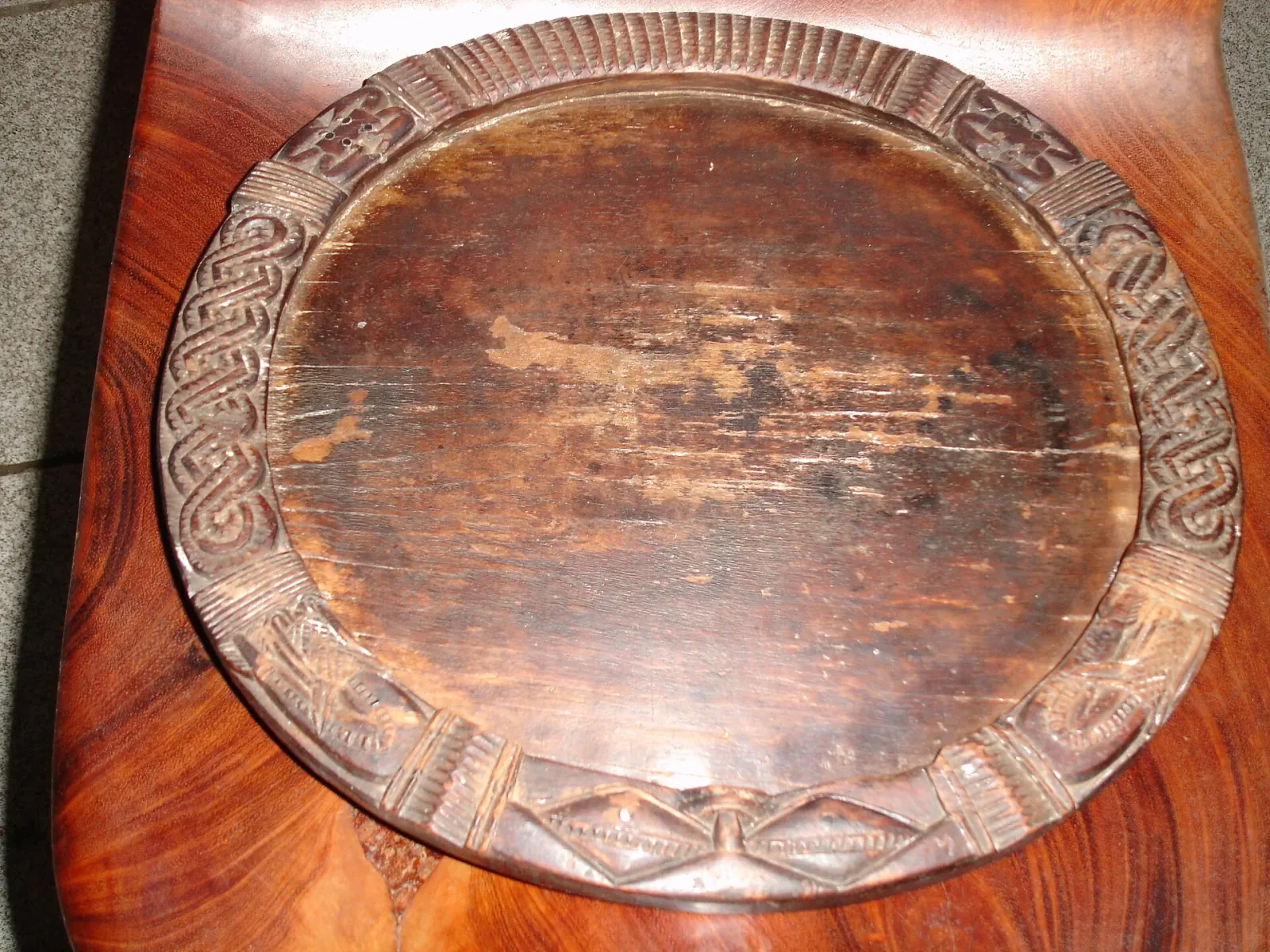
William Bascom recorded the rule in 1969. The babaláwo grasps at the sixteen ikin: if two nuts remain in his hand, he draws a single mark in the wood dust on the carved tray, the ọpọ́n Ifá; if one remains, a double mark. Any other result is not counted. Four marks make one of sixteen basic figures; eight make one of 256. With the ọ̀pẹ̀lẹ̀, one throw gives all eight at once: each shell falling concave side up counts as a single mark, convex side up as a double.
A seventeenth nut, the odusọ, sits apart in a ring of cowries and is never part of the count.
The verses
A cast does not end at the figure. Each Odù carries its verses: stories of past consultations, what was asked, what was offered, what followed. The babaláwo recites; the client recognizes which verse speaks to their situation. In this sense Ifá is a library held in memory, with the 256 Odù as its shelving.
The sixteen principal Odù, in the order used in many Yoruba communities: Ogbè, Ọ̀yẹ̀kú, Ìwòrì, Òdí, Ìrosùn, Ọ̀wọ́nrín, Ọ̀bàrà, Ọ̀kànràn, Ògúndá, Ọ̀sá, Ìká, Òtúrúpọ̀n, Òtúrá, Ìrẹtẹ̀, Ọ̀ṣẹ́, Òfún. Bascom records a somewhat different order at Ifẹ̀.
- From
- Germanic peoples, Scandinavia and the continent (before the Viking Age)
- Unit
- A rune: a letter with a name
- Set
- 24 runes in the Elder Futhark, named for its first six: f u þ a r k
- Used for
- Writing, names and carved charms; casting them is modern
- Text
- The rune poems; the Hávamál
What the tradition says
In the Hávamál, Odin hangs nine nights on the windswept tree, wounded by a spear, given to himself, and screaming takes up the runes (stanzas 138–139; numbering varies by edition). In the tradition's own account the runes were won, not invented, and the poem goes on to their carving and their power. Each rune is a sound and a name: fehu, cattle and wealth; ansuz, a god; dagaz, day. No complete list of the Elder Futhark names survives; they are reconstructed from later sources.
What the record shows
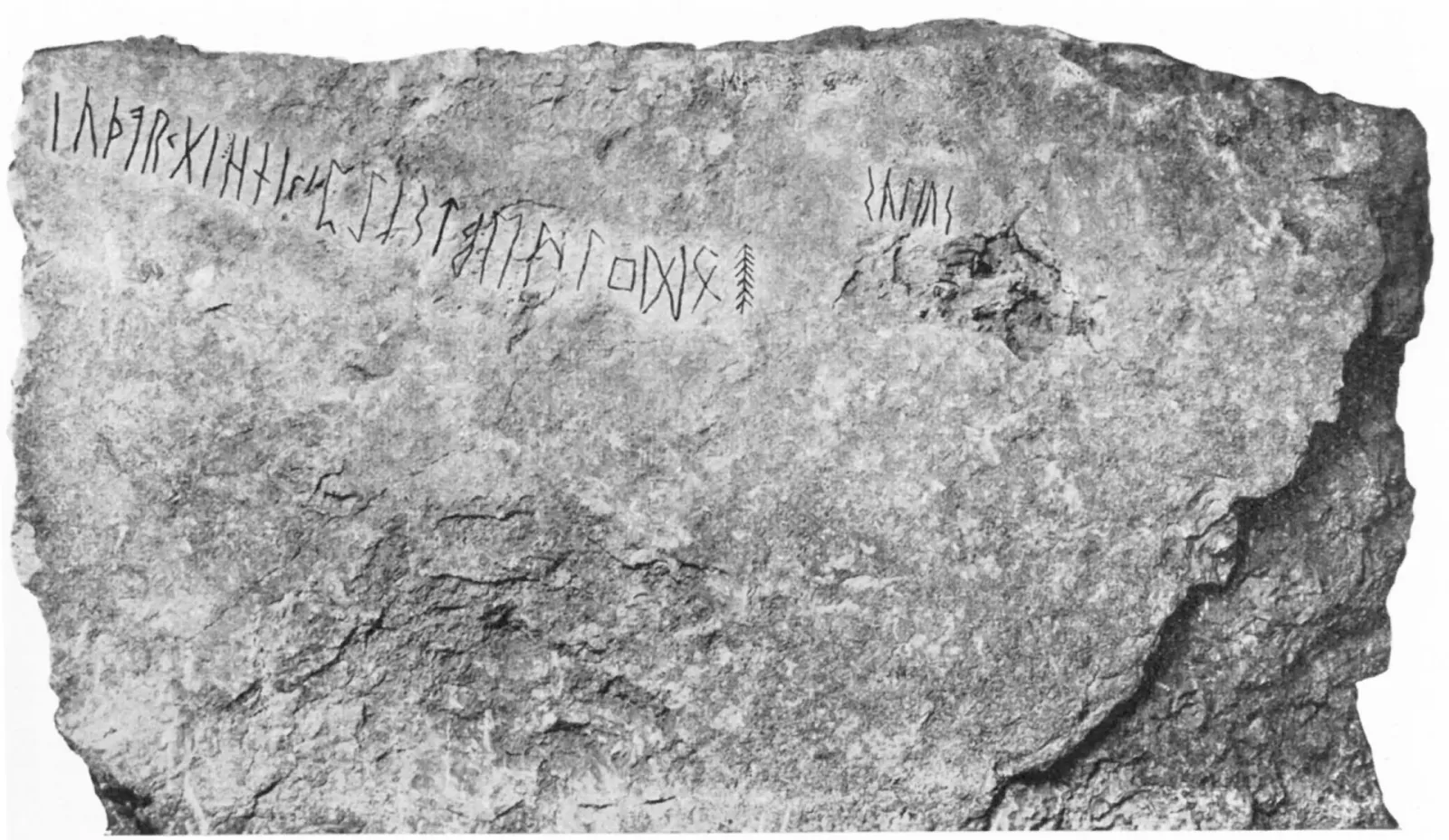
The earliest certain runic inscription, a comb from Vimose in Denmark, dates to about 150–160 CE. The 24-rune row was used across the Germanic world, in Scandinavia and on the continent, until about the eighth century. It is older than the Viking Age and older than Old Norse; the Vikings themselves wrote the sixteen-rune Younger Futhark. So “Germanic” is the accurate name for it, not “Norse.” The meanings of the names come mostly from three later rune poems, Old English (8th–10th century), Norwegian (12th–13th) and Icelandic (15th), the last two written for the sixteen-rune row.
The sources show runes carved as charms and amulets, and they show lots being cast. They do not show runes being cast as lots. Tacitus (98 CE) describes a branch cut into slips “distinguished by certain marks” (notis quibusdam), scattered on a white cloth, three picked up and read; some translations render the marks as “runes,” but Tacitus does not say so, and he wrote half a century before the first certain rune. Rune-casting as most people meet it today was shaped in the twentieth century: Guido von List's eighteen-rune Armanen row (1908), and Ralph Blum's Book of Runes (1982), which reordered the runes, added a blank one, and took much of its method from the I Ching, by Blum's own account.
Some rune forms were taken up as insignia by the Nazi SS and are used by hate groups today. The Library shows the runes only as a full, plain row on a real object, as above.
- From
- Northern Italy, then France and England
- Unit
- A painted card
- Set
- 78: 22 trumps (the major arcana) and 56 suit cards
- Cast with
- Cards shuffled and laid out in a spread
- Text
- The images; later, the occult commentaries
A game first
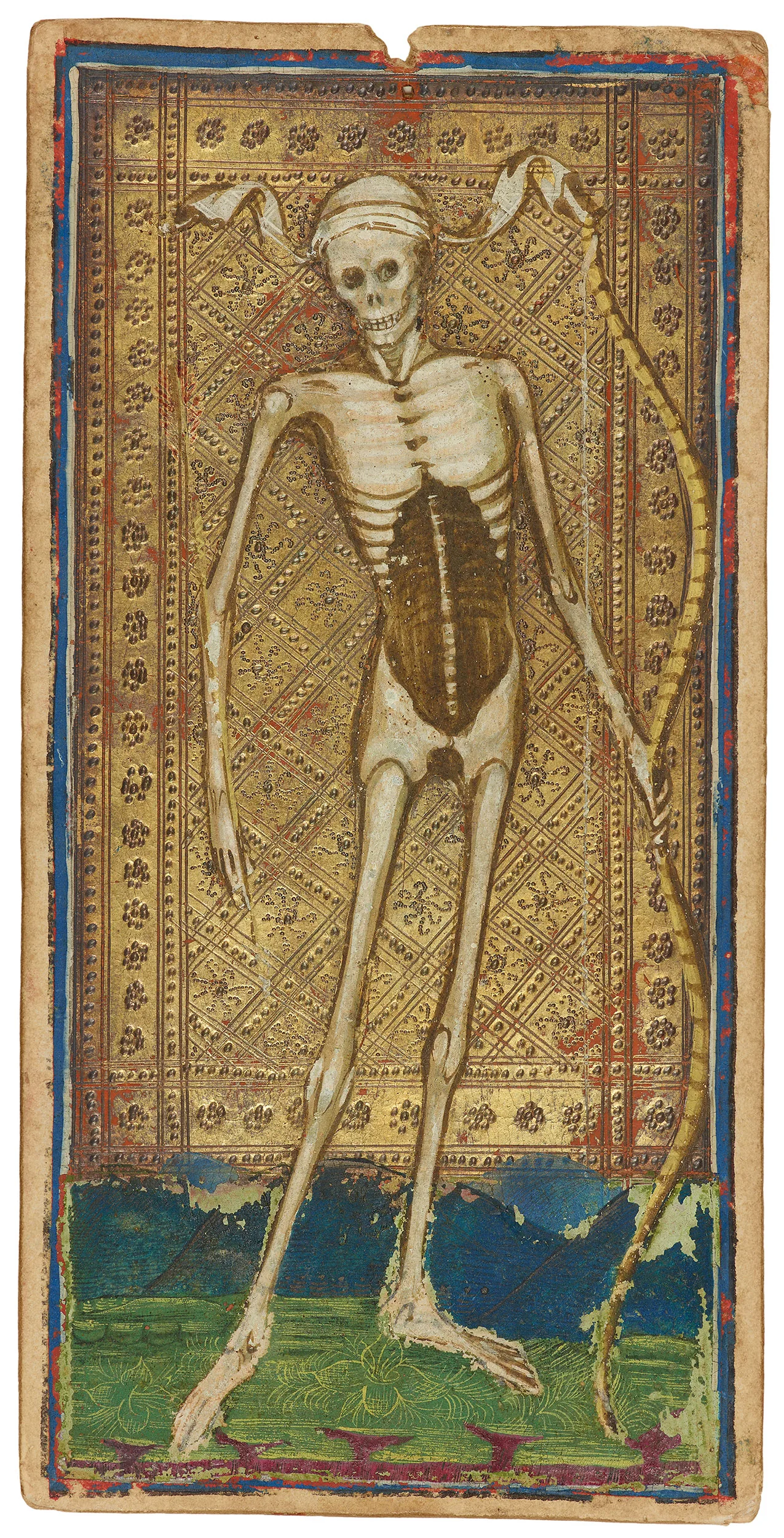
The earliest record of the cards is a Florentine notary's diary: on 16 September 1440, two costly packs of trionfi were given to Sigismondo Malatesta. The Este court at Ferrara ordered packs in 1442. They were made for a trick-taking game in which the illustrated trumps outrank the four suits, and versions of it are still played. The card above, Death, is from the Visconti-Sforza deck painted in Milan in the 1450s–60s; 74 of its cards survive, divided between the Morgan Library, the Accademia Carrara and a private collection in Bergamo.
Then an oracle
The earliest record of reading the cards is a sheet from Bologna giving divinatory meanings for 35 of the 62 cards in the local pack, dated by inference to about 1750, possibly earlier. In 1781 Antoine Court de Gébelin, with an essay by the Comte de Mellet in the same volume, wrote that the tarot was an ancient Egyptian book. No evidence for an Egyptian origin has been found, and hieroglyphs could not yet be read when he wrote, but the idea took hold; Mellet's essay first matched the trumps to the 22 Hebrew letters. Jean-Baptiste Alliette, writing as Etteilla, published his method in 1783–85. The Hermetic Order of the Golden Dawn built the cards into its system in the 1890s, and in 1909 Pamela Colman Smith painted the Rider-Waite-Smith deck, giving every one of the 78 cards a scene. Most decks in use today descend from hers.
For readers, the cards are a mirror: the images carry the meaning, and the reading is in how they fall together. That practice is documented from the eighteenth century, and it is a living one.
- From
- All of Mesoamerica; kept today by K’iche’ and other Maya daykeepers
- Unit
- A day: a number from 1 to 13 with one of 20 day names
- Set
- 13 × 20 = 260 days
- Cast with
- Seeds and crystals counted out in groups by the daykeeper
- Text
- The count itself; the painted almanacs of the codices
The count
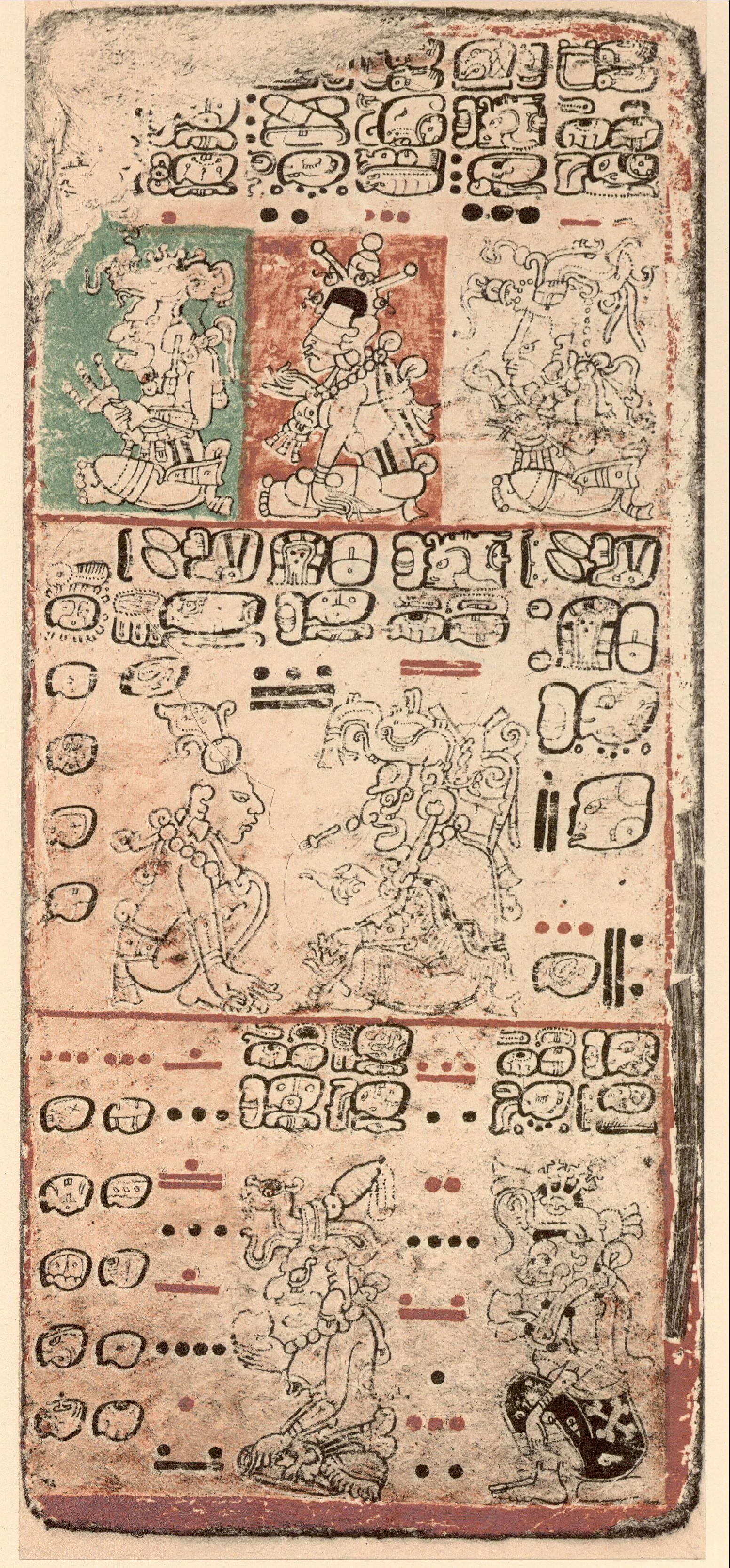
Each day pairs a number from 1 to 13 with one of twenty day names, and the two cycles turn together until the same pairing returns 260 days later. The count belonged to all of Mesoamerica: the Aztec tonalpohualli and the Zapotec piye are the same 260 days. It is at least 2,200 years old: a mural fragment at San Bartolo, Guatemala, radiocarbon-dated to about 300–200 BCE, carries the day 7 Deer (Stuart et al., 2022). The Dresden Codex above, probably thirteenth-century (its date is debated), is one of four Maya books that survived the Spanish conquest, and most of its pages are almanacs built on the count, beside tables of Venus and eclipses.
“Tzolk'in” is a name scholars gave the count in the twentieth century. K'iche' speakers call it the ch'olq'ij, the count of days.
The daykeepers
The count was never lost. In highland Guatemala, K'iche' daykeepers, the ajq'ij, still keep it: they name children, set ceremonies and answer questions by it, counting out the red seeds of the coral tree with crystals to find which days speak. The anthropologists Barbara and Dennis Tedlock were initiated as daykeepers in Momostenango in 1976, and Barbara Tedlock described the practice in Time and the Highland Maya (1982). Comparison with a K'iche' calendar of 1722 suggests the count has run without a break since before the conquest.
Why 260? All of these have been proposed: the span of a human pregnancy, which the ethnographic literature connects with midwives and the naming of births; the interval between the sun's two overhead passages near 15° north (Malmström, 1973); 13 and 20 as counts that already mattered; eclipse and Venus cycles; and the farming year. The page leaves them side by side.
- From
- India: Hindu and Tantric worship
- Unit
- A diagram: triangles, petals, circles, a gated square
- Set
- Many yantras, each the form of a deity, each paired with a mantra
- Used by
- Worship and meditation; it is not cast
- Text
- The Tantras and their commentaries
An instrument, not a lot
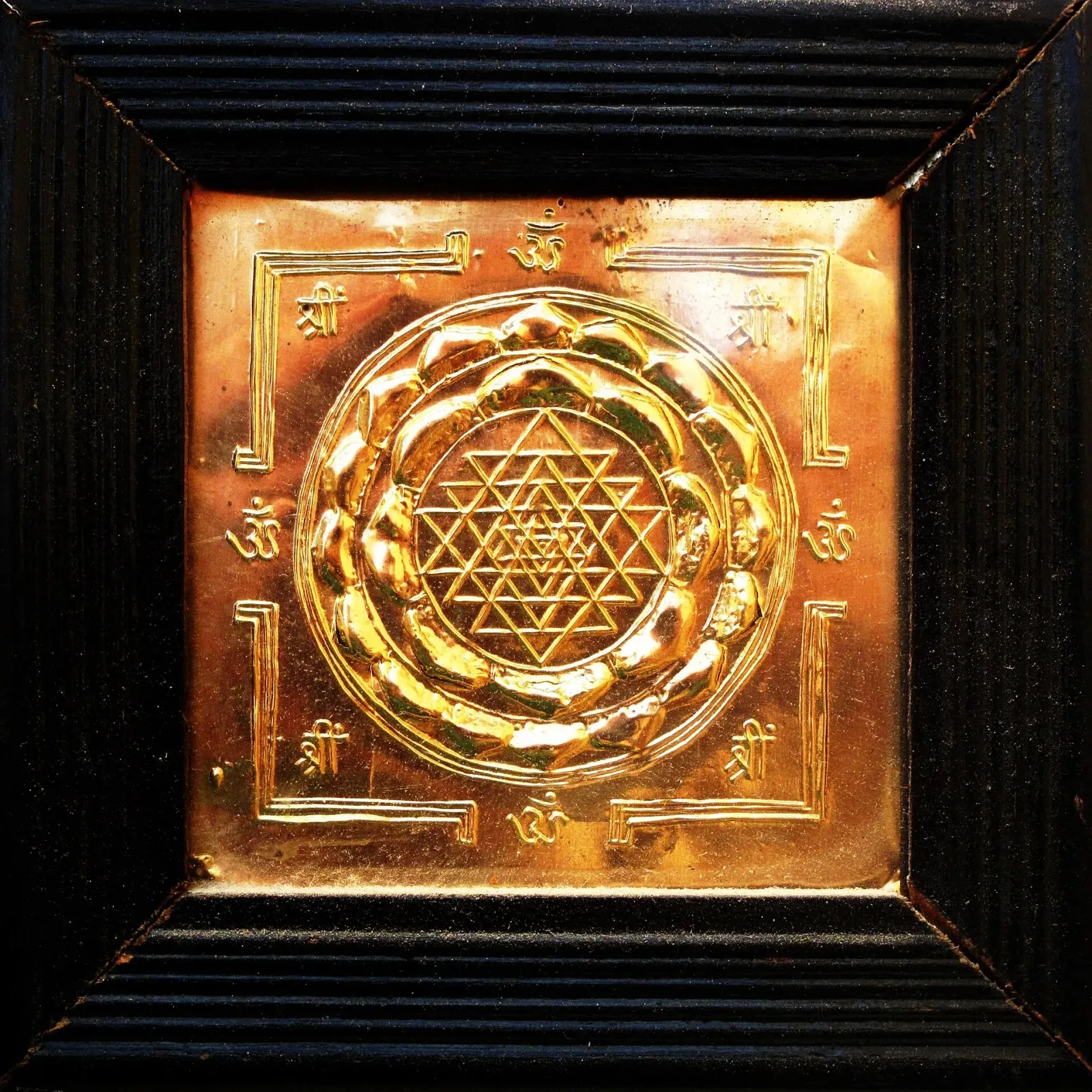
Yantra is Sanskrit for an instrument or device. In Hindu and Tantric practice a yantra is a diagram that serves as the form and seat of a deity, paired with that deity's mantra: the mantra is the sound, the yantra the shape. Once consecrated it is worshipped, and it is meditated on from the outside in, toward the point at its center.
The Sri Yantra (Sri Chakra) above is the form of the goddess Lalitā Tripurasundarī in the Śrī Vidyā tradition. Nine triangles, four of Śiva and five of Śakti (Saundaryalaharī 11), interlock to make forty-three smaller triangles around the central point, the bindu, inside rings of eight and sixteen lotus petals and a square enclosure with four gates. Which way each set points is a matter of commentary and lineage.
How the Innerverse uses it
A yantra is not a divination system in its own tradition, and the Library says so plainly. The Innerverse offers a yantra as a contemplative draw: a diagram and its mantra to sit with. That is an adaptation, and it is marked here as one. The texts of the Śrī Vidyā tradition date from medieval India, roughly the ninth to thirteenth centuries.
India’s documented oracle: the Pāśakakevalī
India does have an attested dice oracle. The Pāśakakevalī uses three oblong four-sided dice, giving 4³ = 64 outcomes, each with a verse; two short manuals of it survive in the Bower Manuscript, from the late fifth or early sixth century CE, now in the Bodleian Library. By the ninth century the same system appears in Old Tibetan texts. Its 64 sits beside the I Ching's 64, reached by a different road: 4³ rather than 2⁶.
Two oracles, one code
Of the six, two build their answers from a mark that can take one of two forms. The I Ching's hexagram is six lines, whole or broken: 2⁶ = 64. Ifá's Odù is eight marks, single or double: 2⁸ = 256. The two traditions are thousands of miles apart, and no documented contact links them; the parallel is in the structure, not in the history.
“Binary” is fair as a modern description of the finished figure, not of how its makers thought about it. Each I Ching line is drawn as one of four values, and the oldest hexagrams were written as numbers. A diviner reads a hexagram or an Odù as a named figure carrying its text.
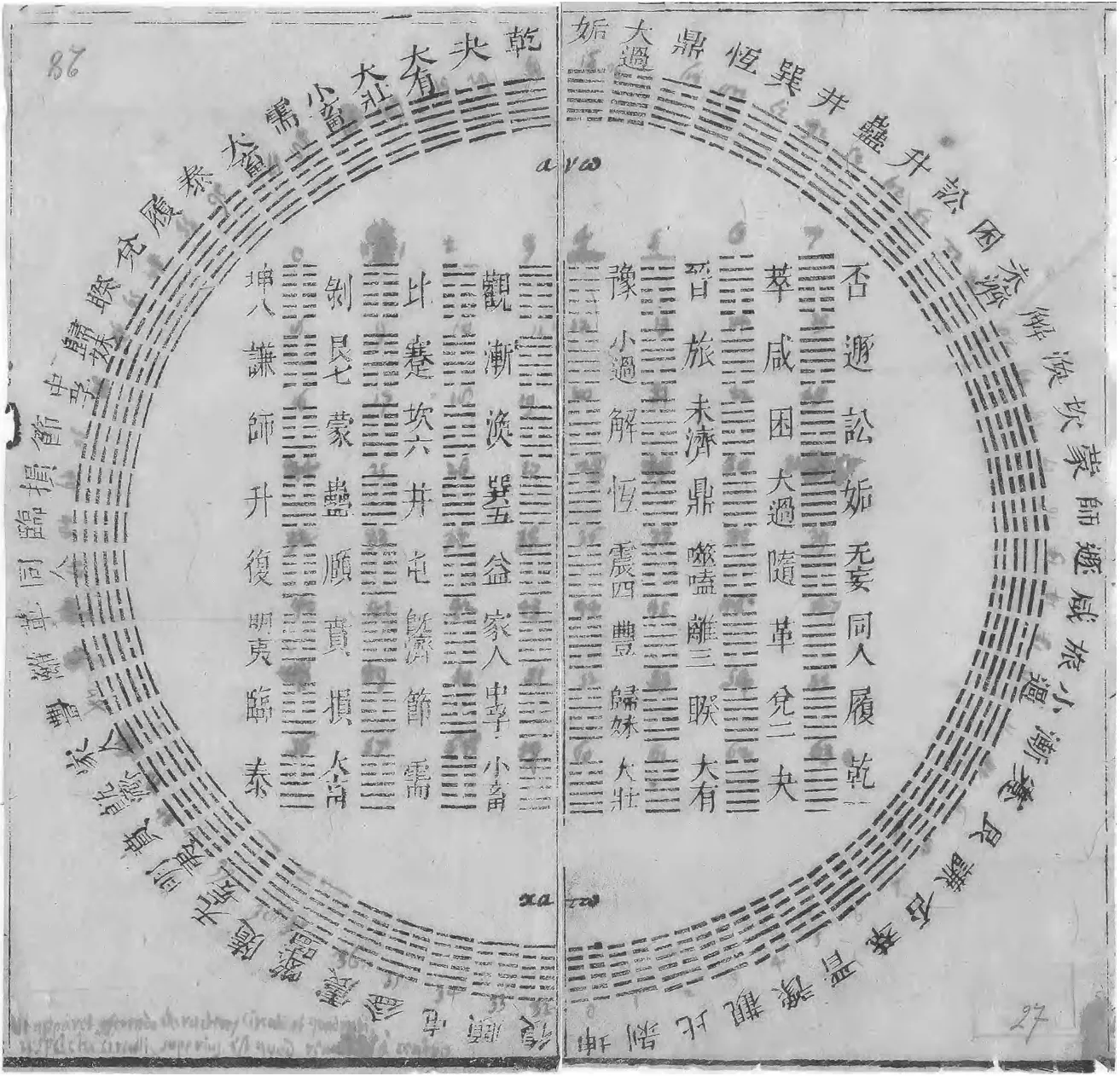
Leibniz, 1679 to 1703
- 1670sGottfried Wilhelm Leibniz works out arithmetic in base two. His earliest dated manuscript on it, De Progressione Dyadica, is dated 15 March 1679. His calculus dates to 1675. Neither has anything to do with China.
- 1701On 15 February he explains binary by letter to Joachim Bouvet, a Jesuit mathematician at the Kangxi court in Beijing, reading it as creation from one and nothing. Bouvet replies on 4 November, enclosing the diagram above: Shao Yong's eleventh-century arrangement of the 64 hexagrams. Leibniz's own copy, with his annotations.
- 1703The letter reaches him on 1 April. On 7 April he dates “Explication de l'arithmétique binaire,” which notes that the hexagrams, read whole = 1 and broken = 0, count in order. It appeared in the Académie royale des sciences' Mémoires for 1703, printed in 1705.
In the paper he wrote that the match “leaves me with a high opinion of the depth of Fuxi's meditations,” and, in the same pages, that the Chinese had lost the meaning and its true explanation had to come from Europeans. That second claim is his view, and it is quoted as his.
What that does and does not mean
Leibniz did not learn binary from the I Ching: he had it first and recognized it in a Chinese diagram. The diagram is an eleventh-century arrangement of much older figures; the order of the ancient book is different and does not count. Binary was invented independently at least three times in the seventeenth century, and Leibniz's version is the one that carried forward. Modern computers run on two symbols, but their engineers built on George Boole's algebra of logic and on Claude Shannon's 1938 work on switching circuits, not on either oracle.
Ifá and the sand-writers
Arabic geomancy, ʿilm al-raml, the “science of the sand,” also builds sixteen figures from four marks of one or two. Its spread to Madagascar as sikidy and to medieval Europe as geomancy is accepted. Whether Ifá shares a root with it is debated: some scholars have argued for a family of related systems, and Yoruba scholars, Wande Abimbola among them, reject an Arabic origin. The two also differ in scale: geomancy works with sixteen figures, while Ifá pairs them into 256, each with its own verses.
| System | From | Built from | Dating |
|---|---|---|---|
| I Ching | China | Six lines, whole or broken → 64 | Core c. 3,000 years ago |
| Ifá | Yorubaland | Eight marks, single or double → 256 | Oral; UNESCO 2005 / 2008 |
| Runes | Germanic world | 24 named letters | Inscriptions from c. 150 CE; casting them is 20th c. |
| Tarot | Italy, then France | 78 painted cards | Cards from 1440; reading documented c. 1750 |
| 260-day count | Mesoamerica | 13 numbers × 20 day names → 260 | At least 2,200 years; still kept |
| Yantra | India | A deity’s diagram with its mantra; 9 triangles | Texts 9th–13th c.; worshipped, not cast |
What the six share, and what they do not
Each has a number at its core, but not the same kind of number: 64 and 256 count possible answers, 260 is the length of a cycle, 24 is the size of an alphabet, 78 of a deck, and 9 counts the triangles of a diagram. Three of the six turn chance into a sign: a fall of stalks, nuts or cards. The 260-day count reads the day itself, the runes were letters before they were lots, and the yantra is not a throw at all. Three keep their meaning in a text that travels with the system (the Zhouyi, the Ifá verses, the rune poems); tarot keeps it in images; the daykeeper and the babaláwo keep it in trained memory.
Possible readings of the likenesses: that a yes-or-no mark is the simplest thing a person can ask of chance, so it keeps being found; contact along routes not yet traced; or what each tradition says of itself, that the figures were given. The page lays these out and leaves the choice with you.
Where each statement on this page stands. Corrections from practitioners of any of these traditions are invited and get made.
I Ching: 64 hexagrams; four line values; oldest hexagrams written as numbers.
Checked (CO, Oct 17): Shaughnessy 2022, Zhang 1980, Adler 2022.
Ifá: Bascom’s marking rule; 16 and 256; UNESCO 2005 and 2008; about 800 verses per Odù.
Checked (CO, Oct 17): Bascom 1969, ich.unesco.org file 00146.
Leibniz: 15 Mar 1679; 15 Feb and 4 Nov 1701; received 1 Apr 1703; paper dated 7 Apr 1703, printed 1705.
Checked (CO, Oct 17): Strickland & Lewis 2022, Mungello, Maître.
Ifá and Arabic geomancy: debated.
Checked (CO, Oct 17). Contact between China and Yorubaland: none documented.
Runes: Germanic, not Norse; no pre-modern rune-casting attested; Tacitus wrote “certain marks.”
Checked (CO pass 2, Oct 17): Vimose dating, Hutton’s Loeb translation, Goodrick-Clarke on List.
Tarot: Florence 1440; Bologna cartomancy c. 1750; the Egyptian origin is a 1781 claim.
Checked (CO pass 2): Pratesi, Morgan Library catalogue. The Bologna date is inferred, not written on the sheet.
The 260-day count: San Bartolo c. 300–200 BCE; pan-Mesoamerican; still kept.
Checked (CO pass 2): Stuart et al. 2022, Tedlock 1982, Weeks, Sachse & Prager 2009.
Sri Yantra: 4 + 5 triangles, 43 small triangles; worship, not divination; texts 9th–13th c.
Checked (CO pass 2): Kak; dating contested. Statements from Śrī Vidyā institutions not yet sought.
Pāśakakevalī: three four-sided dice, 64 outcomes, Bower Manuscript.
Checked (CO pass 2): Hoernle 1897; dated late 5th–early 6th c. CE (Sander 1987).
Sources
- William Bascom, Ifa Divination: Communication between Gods and Men in West Africa (1969).
- Wande Abimbola, Ifá: An Exposition of Ifá Literary Corpus (1976).
- UNESCO, “Ifa divination system,” Representative List, file 00146 (2008; proclaimed 2005).
- Edward L. Shaughnessy, I Ching: The Classic of Changes (1996); The Origin and Early Development of the Zhou Changes (2022).
- Zhang Zhenglang, “An Interpretation of the Divinatory Inscriptions on Early Zhou Bronzes,” Early China 6 (1980–81).
- Joseph Adler, The Yijing: A Guide (2022). Richard J. Smith, Fathoming the Cosmos and Ordering the World (2008).
- Lloyd Strickland and Harry Lewis, Leibniz on Binary (2022).
- Tacitus, Germania 10 (98 CE). The Hávamál, stanzas 138–141.
- Nicholas Goodrick-Clarke, The Occult Roots of Nazism (1985), on List's Armanen runes.
- Michael Dummett, The Game of Tarot (1980). Franco Pratesi, “Tarot in Bologna,” The Playing-Card 17.4 (1989).
- Court de Gébelin, Le Monde primitif vol. 8 (1781), pp. 365–410, with the Comte de Mellet's essay.
- David Stuart et al., “An early Maya calendar record from San Bartolo, Guatemala,” Science Advances 8(15) (2022).
- Barbara Tedlock, Time and the Highland Maya (1982; rev. 1992). Weeks, Sachse & Prager, Maya Daykeeping (2009).
- Vincent Malmström, “Origin of the Mesoamerican 260-Day Calendar,” Science 181 (1973).
- Subhash Kak, “Time, Space and Structure in Ancient India” (2009), on the Śrī Yantra.
- A. F. R. Hoernle, The Bower Manuscript (1897), parts IV–V, the Pāśakakevalī.
Watch
Cast one yourself
The Innerverse carries all six. Each cast is seeded with hardware randomness and the Earth conditions at the moment you press: Schumann resonance, geomagnetic activity, the Moon and the solar wind. It records what you cast under, and makes no claim about what the cast foretells. The Innerverse Ifá implements the sixteen principal Odù.
Open the Innerverse