Giants are one of humanity’s oldest shared stories, from Gilgamesh to the Paiute to Patagonia. Here is what each culture actually wrote, in its own words, next to what the bones show. Ice Age people really did grow bigger. They grew heavier and bigger-headed, not taller.
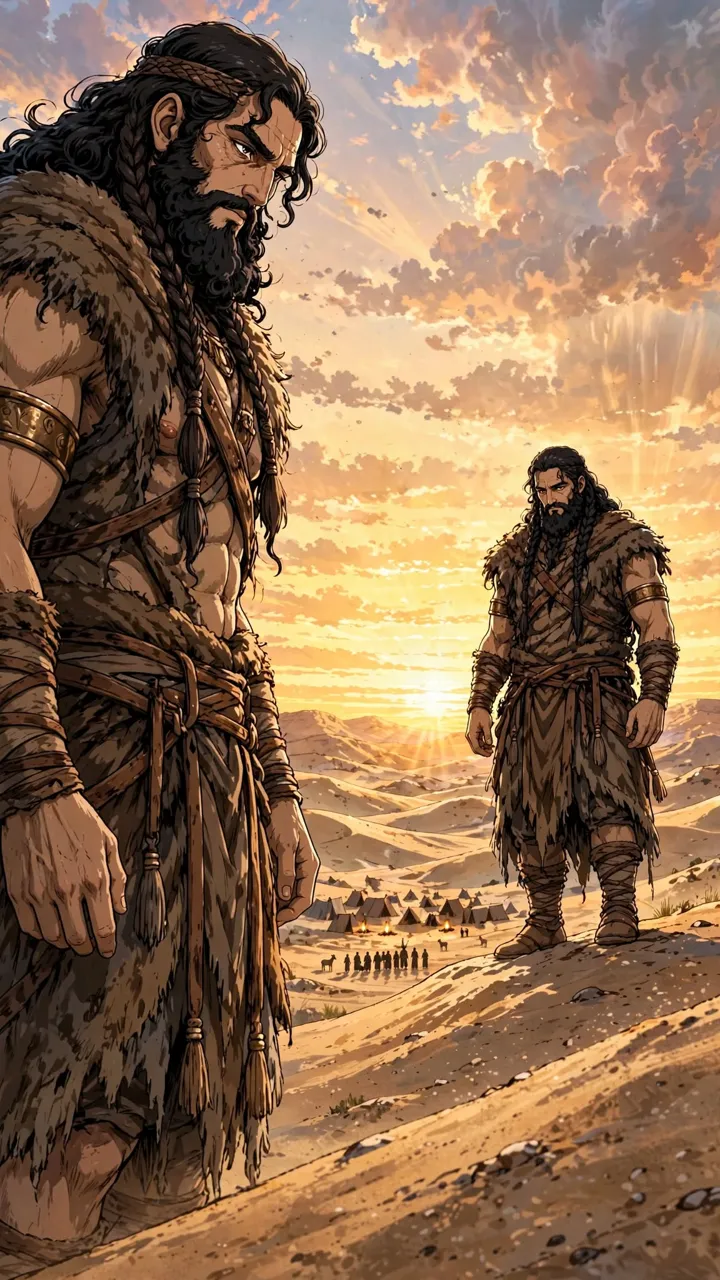
Gilgamesh, two-thirds god. Illustration from our Giants video.
How to read the badges
Each claim carries the grade our research gave it. A High grade on a tradition means the text says what we report, not that the event happened.
HighA primary text checked directly, a measured or replicated result, or scholarly consensus.
Medium–HighStrong secondary support or a well-replicated estimate.
MediumA reputable secondary source, or a contested estimate from a peer-reviewed method.
Low–MediumThin or single-source support; check before relying on it.
LowA single secondhand or partisan source.
SpeculativeAn inference with no direct evidence.
ContradictedThe evidence on record runs against the claim.
TRY IT
Every height on this page, side by side
Tap any line to stand it next to an average man today. Green is a measured body. Gold is a number written in a text. Violet is a carved figure. Grey is an estimate.
Measured bodyWritten in a textCarved figureEstimate from teeth
Goliath in the later standard text (Masoretic)
High
9 ft 9 in(2.97 m)
"Six cubits and a span," at 18 inches to the cubit. Which reading is original is still argued.
Source: Hays 2005; Billington 2007
ACT ONE
The Ice Age made humans bigger, but not taller
The largest study of hominin body size, 311 specimens over 4.4 million years, finds modern height in place by about 1.6 million years ago. Consistently heavier bodies only appear about 500,000 to 400,000 years ago, as people moved into colder latitudes. High
The Sima de los Huesos people of northern Spain, about 430,000 years ago, averaged 5 ft 7 in and over 198 lb. Neanderthals, the classic cold-climate humans, got stockier, not taller: men averaged about 5 ft 5 in, with wide trunks and short shins, a build one researcher calls “hyperpolar.” Medium–High
The outsized traits are heads and teeth. The Harbin skull from China, at least 146,000 years old and identified as Denisovan in 2025, measures 8.7 in long against about 6.9 in for men today. It is the longest archaic human skull ever measured. High
The one true Ice Age primate giant, Gigantopithecus, was an ape related to orangutans, known only from teeth and jaws. Its size, about 9 ft 10 in, is a guess scaled up from those teeth. High
Physics sets a ceiling. Double a body’s height and its weight goes up eightfold, while bone cross-section only goes up fourfold. Robert Wadlow reached 8 ft 11 in through pituitary disease, wore leg braces, and died at 22. High
The open window
Nobody knows how tall Denisovans were, because no Denisovan body skeleton has been found. That window is real. It is open for lack of evidence, not because evidence of height exists. Speculative
Climate predicts body mass and shape much better than height. Some of the tallest peoples ever measured live in hot climates, and nutrition alone moved average heights 6 in to 8 in within single countries in one century. High
ACT TWO
The Near East measured its giants in cubits
His stature was 11 cubits, 4 cubits were the middle parts of his breast.
That line about Gilgamesh comes from a tablet older than the standard epic, whose clay is broken just where a total height would sit. The epic says “the Lady of the Gods drew the form of his figure,” and calls him two-thirds god. The size belongs to his divine making. Reading 11 cubits as a real body is graded Low. High
Illustration from our Giants video.
THE OLDEST HEBREW COPY
4 cubits and a span
About 6 ft 9 in. 4QSam-a from the Dead Sea Scrolls, about 2,075 years old, with the Septuagint and Josephus.
THE LATER STANDARD TEXT
6 cubits and a span
About 9 ft 9 in. The Masoretic text of 1 Samuel 17:4, the reading most Bibles print.
Goliath has a real textual variant. One scholar calls the higher number a copying error. Another argues the Greek converted to Egyptian royal cubits, so both point to a man of about 7 ft 8 in to 8 ft 11 in. Which reading is original is still argued. The Bible itself is divided on who killed him: 2 Samuel 21:19 credits a man named Elhanan. High
Og of Bashan is called “the remnant of the Rephaim.” Deuteronomy measures his iron bed, nine cubits by four, and says it was kept in Rabbah of the Ammonites, today Amman. In older Ugaritic texts the rpum are the spirits of dead kings, which makes Og’s “bed” read like a funeral couch. High
Gilgamesh walks straight into the giant stories of Judaism. The Aramaic Book of Giants, found at Qumran, names two of the giants Gilgamesh and Hobabish, who is Humbaba, the cedar-forest guardian of the epic. High
The Anakim, as the spies of Numbers 13 described them. Illustration from our Giants video.
Do the cubit math yourself
9 ft 6 in (2.89 m)
1.1 times the height of Robert Wadlow, the tallest human ever measured.
Text: Masoretic 1 Sam 17:4
Try Goliath with each cubit. The same words give anywhere from about 6 ft 7 in to 11 ft 2 in, which is one reason scholars still argue about him. A cubit was a forearm, elbow to fingertip, and every culture’s forearm was a little different.
THE BONE BRIDGE
Cultures dug up enormous bones, measured them, and named their owners
About 2,500 years ago, within a century of each other, Greek and Chinese writers both recorded finding huge bones and naming the giant they belonged to. Across cultures, giants explain three things: big bones, big monuments and big strangers. High
Tegea, Greece
High
Herodotus 1.68, about an event ~2,585 years ago
"I had never believed that men were taller in the olden times than they are now, so I opened the coffin. The body inside was of the same length."
Most likely: Tegea’s region holds Miocene and Pleistocene mammal fossils.
Kuaiji, China
High
Guoyu, event ~2,520 years ago
An envoy holds up a bone "one joint of which filled a cart." Confucius names it: Fangfeng, killed by Yu for arriving late. (節專車)
Most likely: Species never identified. A fossil is likely; the text gives no locality to check.
Utica, Tunisia
High
Augustine, City of God 15.9, ~1,600 years ago
"A human molar so enormous that, cut into pieces the size of our teeth, it would have made a hundred. But I would believe it belonged to some giant."
Most likely: An elephant or mammoth molar. Augustine himself says he inferred the giant.
Tlaxcala, Mexico
High
Bernal Díaz, event ~507 years ago (1519)
"I measured myself against it, and it was as tall as I am." Cortés sent the bone to the king in Castile.
Most likely: A mastodon or mammoth femur.
Basin of Mexico
High
Chimalpahin, a Nahua annalist, 1608
Workers dug up bones "which our grandparents called quinametin," and the viceroy came to see them.
Most likely: The Basin of Mexico is mammoth country.
Santa Elena, Ecuador
High
Cieza de León, 1553
Giants destroyed by fire from heaven left "some bones and skulls." His chapter title names the tar seep.
Most likely: At Tanque Loma, more than 85% of over 1,000 bones are one giant ground sloth, Eremotherium.
These people were measuring real objects. Their conclusions followed from a belief many cultures shared, that earlier people were larger. The species behind the Chinese bone was never identified, so no particular fossil should be called “Fangfeng’s bone.”
IN THEIR OWN TERMS
Twenty-three traditions, in their own words
Four patterns recur: earlier peoples who were destroyed or vanished, huge bones, monuments too large for living builders, and tall strangers. Often a later writer supplied the “giant.”
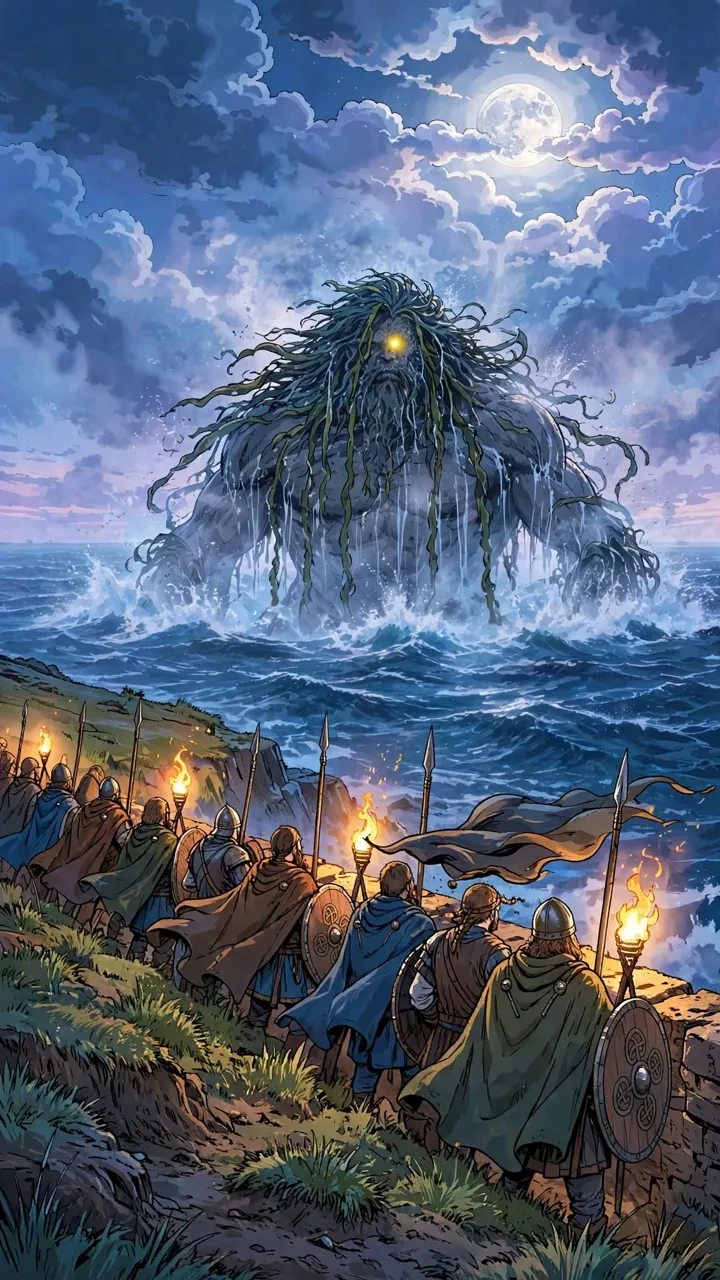
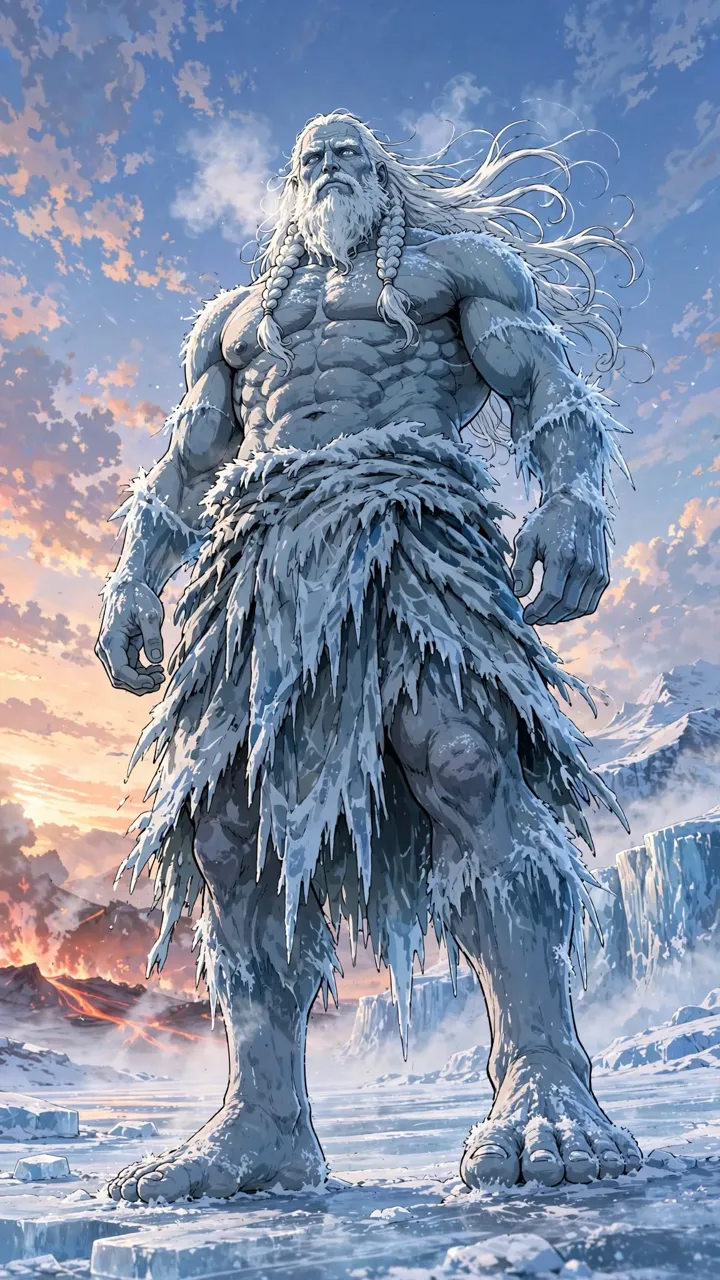
Many peoples remember those who came before. Illustration from our Giants video.Irish Fomoire, fought by each wave of settlers. Illustration from our Giants video.Norse Ymir, whose body became the world. Illustration from our Giants video.
Mesopotamia
High
Gilgamesh, Humbaba
A god-made king of 11 cubits; the cedar-forest guardian
Ugarit tablet, ~3,100–3,300 years ago
Israel
High
Nephilim, Anakim, Rephaim
Goliath, Og and his bed; Rephaim are also the spirits of dead kings in Ugaritic texts
4QSam-a, ~2,075 years ago (oldest copy)
Second Temple Judaism
Medium–High
Book of Giants (Aramaic)
Giants named Gilgamesh and Hobabish (Humbaba) dream of a ruined garden
4Q530, ~2,050–2,125 years ago
Greek
High
Gigantes, Titans, Cyclopes
Giants born of Ouranos’s blood; Orestes’ bones in a seven-cubit coffin
Hesiod and Homer, ~2,700 years ago
Roman
Medium–High
gigantum ossa
Augustus displays "bones of giants" at his Capri villa
Suetonius, ~1,905 years ago
Norse
High
jǫtunn, þurs, risi
Ymir’s body becomes the world; his blood drowns the frost-giants
Snorri, ~805 years ago
Irish
Medium
Fomoire
Hostile beings fought by each wave of settlers; "giant" is mostly a later label
Lebor Gabála, ~950 years ago
Welsh
Medium–High
Bendigeidfran
A king too large for any house; his head guards Britain
Mabinogi manuscripts, ~650 years ago
British
High
Goemagot
A giant 12 cubits tall thrown from a cliff
Geoffrey of Monmouth, ~890 years ago
Basque
Medium
jentilak (from "gentiles")
Pagan builders of the dolmens who vanish when Christ is born
Oral, recorded in the 20th century
German, Sardinian
Medium–High
Hünengräber, tombe dei giganti
"Giants’ graves": names given long after to Neolithic and Bronze Age tombs
Place names
South Asia
High
daitya, dānava, rākṣasa
Kumbhakarṇa, mountain-sized; Ghaṭotkaca crushes an army as he falls
Rigveda, ~3,000–3,500 years ago
China
High
防風氏 Fangfeng; 長狄 "Tall Di"; 盤古 Pangu
One joint of Fangfeng’s bone "filled a cart"; Pangu grows one zhang a day
Guoyu, event ~2,520 years ago
Japan
Medium–High
だいだらぼっち daidarabotchi
A giant at Ōkushi eats clams; the shells pile into a hill, which is a real Jōmon shell mound
Hitachi fudoki, ~1,310 years ago
Persian
Medium–High
div; Div-e Sepid
The White Div killed by Rostam in his seventh labor
Shahnameh
Nuristani
Medium
yush
Giants or demons who held the sun and moon until the gods freed them
Robertson’s fieldwork, ~135 years ago
Nguni, Swahili, Kikuyu
High
izimu, zimwi, irimu
Ogres "magnified into giants and magicians." A Zulu speaker glossed amazimu as "to gormandize"
Callaway, ~158 years ago
Basotho
Medium
Kammapa (Khodumodumo)
A swallowing monster killed from inside by the child Ditaolane
Casalis, ~185 years ago
Mexica
High
quinametin
Giants of an earlier sun who greeted each other "don’t fall"
Anales de Cuauhtitlan, 16th century
Tlaxcala
High
(reported in Spanish) gigantes
Elders say their ancestors fought and killed wicked giants, and show a thigh bone
Bernal Díaz, written ~458 years ago
Northern Paiute
High
"people-eaters"
A reddish-haired enemy tribe killed in a cave. No giants, no size
Sarah Winnemucca, 1883
Iroquoian
Medium
Stonish Giants, Genonsgwa
Flint-skinned cannibal giants from the west
Cusick, ~199 years ago
Patagonia
High
"Patagones" (a European label)
"We reached only to his waist": a tall people, enlarged in print
Pigafetta, ~506 years ago
Culture
Own term
What the tradition records
Earliest source
Grade
Mesopotamia
Gilgamesh, Humbaba
A god-made king of 11 cubits; the cedar-forest guardian
Ugarit tablet, ~3,100–3,300 years ago
High
Israel
Nephilim, Anakim, Rephaim
Goliath, Og and his bed; Rephaim are also the spirits of dead kings in Ugaritic texts
4QSam-a, ~2,075 years ago (oldest copy)
High
Second Temple Judaism
Book of Giants (Aramaic)
Giants named Gilgamesh and Hobabish (Humbaba) dream of a ruined garden
4Q530, ~2,050–2,125 years ago
Medium–High
Greek
Gigantes, Titans, Cyclopes
Giants born of Ouranos’s blood; Orestes’ bones in a seven-cubit coffin
Hesiod and Homer, ~2,700 years ago
High
Roman
gigantum ossa
Augustus displays "bones of giants" at his Capri villa
Suetonius, ~1,905 years ago
Medium–High
Norse
jǫtunn, þurs, risi
Ymir’s body becomes the world; his blood drowns the frost-giants
Snorri, ~805 years ago
High
Irish
Fomoire
Hostile beings fought by each wave of settlers; "giant" is mostly a later label
Lebor Gabála, ~950 years ago
Medium
Welsh
Bendigeidfran
A king too large for any house; his head guards Britain
Mabinogi manuscripts, ~650 years ago
Medium–High
British
Goemagot
A giant 12 cubits tall thrown from a cliff
Geoffrey of Monmouth, ~890 years ago
High
Basque
jentilak (from "gentiles")
Pagan builders of the dolmens who vanish when Christ is born
Oral, recorded in the 20th century
Medium
German, Sardinian
Hünengräber, tombe dei giganti
"Giants’ graves": names given long after to Neolithic and Bronze Age tombs
Place names
Medium–High
South Asia
daitya, dānava, rākṣasa
Kumbhakarṇa, mountain-sized; Ghaṭotkaca crushes an army as he falls
Rigveda, ~3,000–3,500 years ago
High
China
防風氏 Fangfeng; 長狄 "Tall Di"; 盤古 Pangu
One joint of Fangfeng’s bone "filled a cart"; Pangu grows one zhang a day
Guoyu, event ~2,520 years ago
High
Japan
だいだらぼっち daidarabotchi
A giant at Ōkushi eats clams; the shells pile into a hill, which is a real Jōmon shell mound
Hitachi fudoki, ~1,310 years ago
Medium–High
Persian
div; Div-e Sepid
The White Div killed by Rostam in his seventh labor
Shahnameh
Medium–High
Nuristani
yush
Giants or demons who held the sun and moon until the gods freed them
Robertson’s fieldwork, ~135 years ago
Medium
Nguni, Swahili, Kikuyu
izimu, zimwi, irimu
Ogres "magnified into giants and magicians." A Zulu speaker glossed amazimu as "to gormandize"
Callaway, ~158 years ago
High
Basotho
Kammapa (Khodumodumo)
A swallowing monster killed from inside by the child Ditaolane
Casalis, ~185 years ago
Medium
Mexica
quinametin
Giants of an earlier sun who greeted each other "don’t fall"
Anales de Cuauhtitlan, 16th century
High
Tlaxcala
(reported in Spanish) gigantes
Elders say their ancestors fought and killed wicked giants, and show a thigh bone
Bernal Díaz, written ~458 years ago
High
Northern Paiute
"people-eaters"
A reddish-haired enemy tribe killed in a cave. No giants, no size
Sarah Winnemucca, 1883
High
Iroquoian
Stonish Giants, Genonsgwa
Flint-skinned cannibal giants from the west
Cusick, ~199 years ago
Medium
Patagonia
"Patagones" (a European label)
"We reached only to his waist": a tall people, enlarged in print
Pigafetta, ~506 years ago
High
ACT THREE
Ancient art drew size by rank, and the captions say so
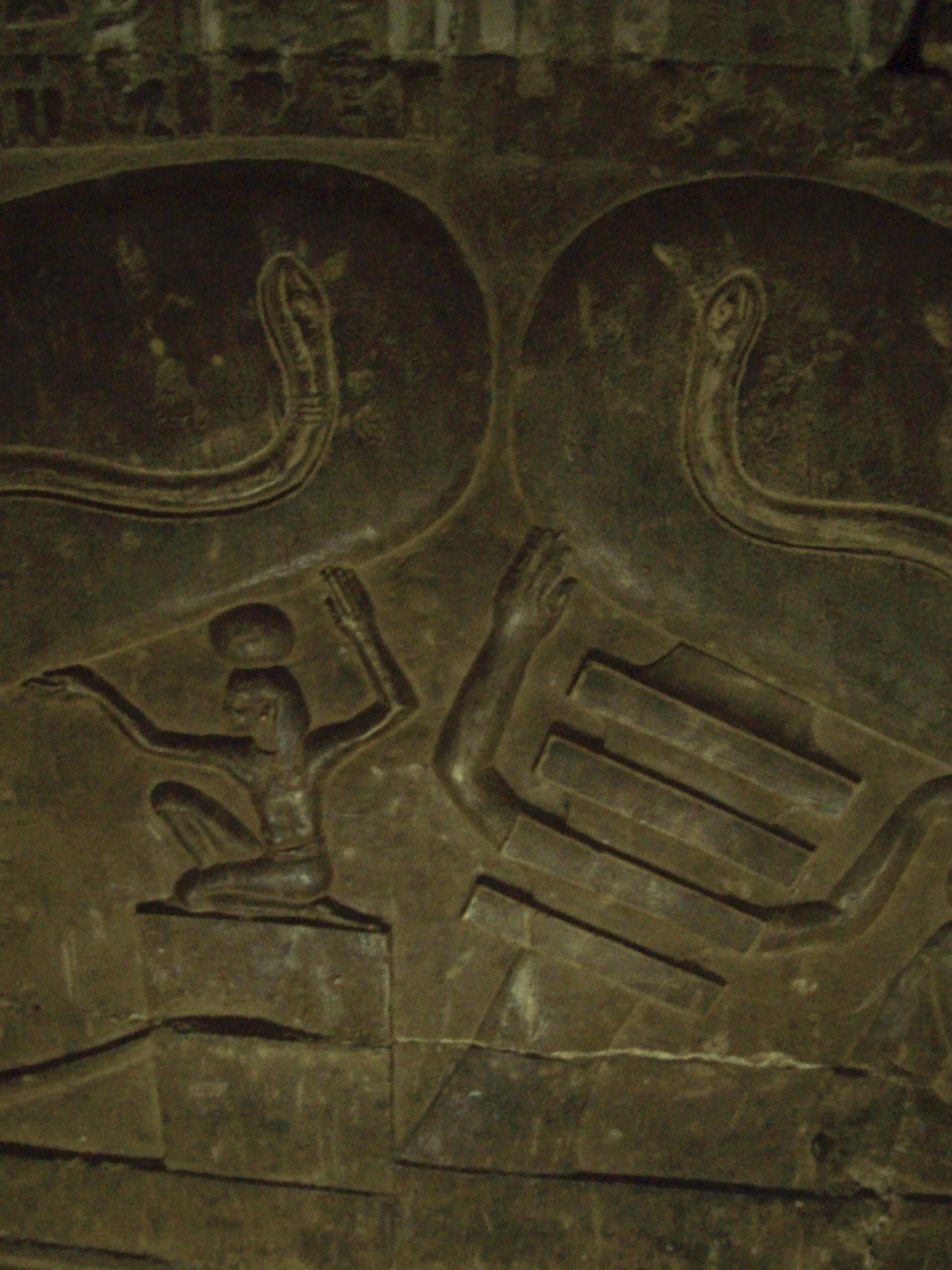
Metal, height: four palms. … Gold and all precious stones, height: three palms. … Gold, height: one cubit.
The famous Dendera “light bulb” reliefs, carved about 2,075 years ago, sit beside captions that read like an inventory of cult statues 9 in to 20 in tall. The text names the god Harsomtus, a snake born from a lotus. The electrical reading is graded Speculative: no glass, sockets or wires have been found, and only one of the six large reliefs shows anything entering the “bulb.” The resemblance people see is real as a perception. The carved text settles what the scene says. High
From the Narmer Palette, about 5,100 years ago, Egyptian and Mesopotamian artists drew important figures larger. Kings tower over soldiers, gods over kings. Children appear as small adults, marked by a sidelock. A big figure in a relief tells you rank, and the labels usually confirm it. High
The exception shows artists could record real bodies when that was the point. The official Seneb is carved with dwarfism, seated cross-legged, with his children placed where an average man’s legs would be. High
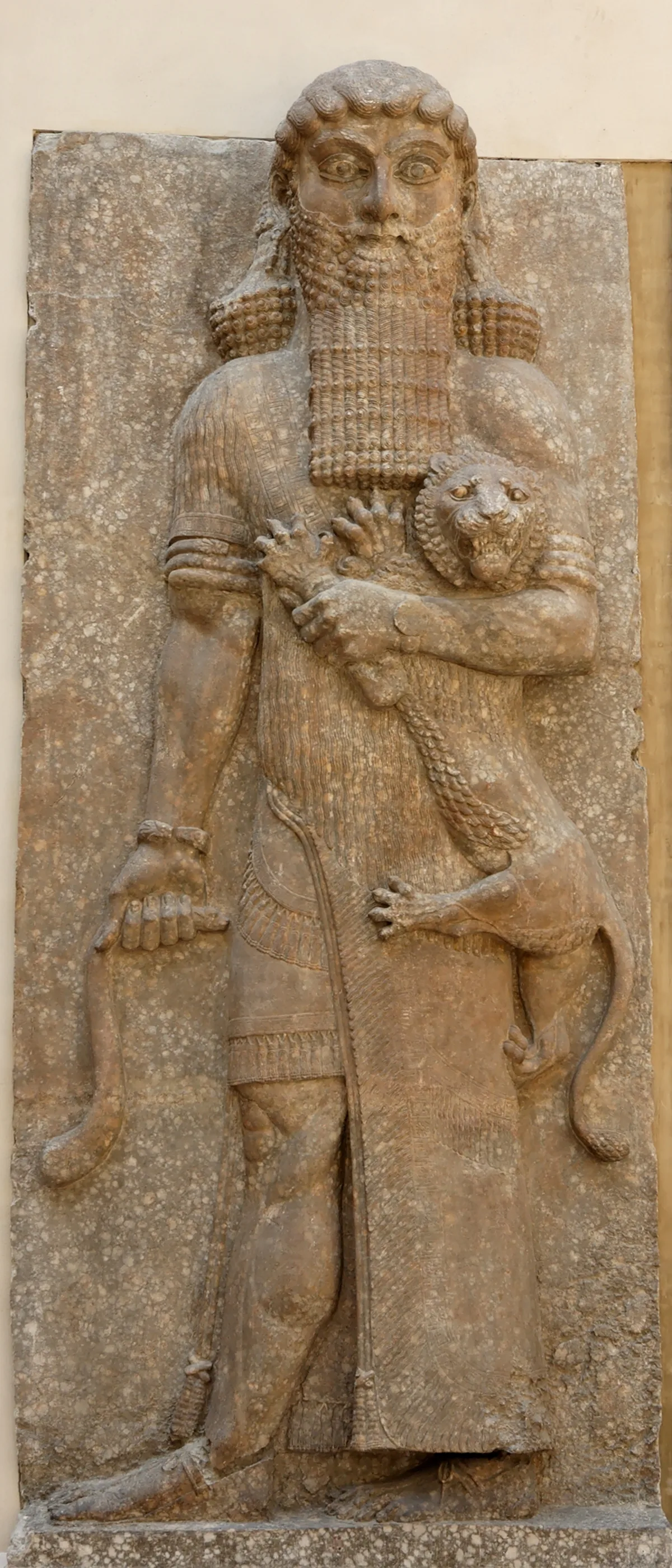
The Khorsabad gate guardian at the Louvre stands 14 ft 7 in to 18 ft 1 in, depending on the record. The catalogue calls him “Hero (Gilgamesh?)”. No inscription names him, and nothing links his height to the 11-cubit tablet. Medium
ACT FOUR
America: what was written, and what was added later
My people say that the tribe we exterminated had reddish hair. I have some of their hair, which has been handed down from father to son.
This is the most misquoted text in the field. Winnemucca describes a cannibal enemy tribe her people fought and burned in a cave. She gives no size, never calls them giants, and never uses the word “Si-Te-Cah.” The giants came later, from other writers. High
Lovelock Cave, Nevada, is a major site, with duck decoys about 2,100 to 2,300 years old. The tallest mummy anyone reported was 6 ft 6 in, never confirmed. Ancient dark hair can turn rust-red after death. Medium–High
The Smithsonian did print 7-foot skeletons
Cyrus Thomas’s 1894 report for the Bureau of Ethnology records at least five skeletons of about 7 feet, from a survey of over 2,000 mounds. The tallest, in West Virginia: “a skeleton, measuring 7½ feet in length and 19 inches across the shoulders,” called a “giant frame” (pp. 426–427). These were lengths of decayed skeletons in the ground, not living heights, and several were elite burials with copper and mica. Thomas asked whether the mound builders were Indians and answered yes. High
The eyes of that species of extinct giants, whose bones fill the mounds of America, have gazed on Niagara, as ours do now.
Lincoln wrote it. He named the mammoth and mastodon separately, and never gave it as a speech. It shows that a giant race of Mound Builders was mainstream educated belief in his day. Where professionals later saw the bones, the giants disappeared: in 1916 the “horned seven-foot skeletons” of Sayre, Pennsylvania turned out to be bundle burials under deer antlers. High
The Giant of Kandahar
The story first appears in November 2005, about 21 years ago, as an anonymous email read on late-night radio. Since then the date, branch, height, weapon and destination have all changed between tellings, and in twenty years no witness has gone on the record by name. There are no photos except AI fakes. The one checkable detail, a named victim, matches a real soldier who died in a 2002 accident near Kandahar with three teammates. We do not repeat his name. That a giant killed him is graded Contradicted. Contradicted
What would change the grade: images with intact metadata, remains with a chain of custody, named witnesses with verifiable service records, or flight manifests. A records request to SOCOM or Wright-Patterson could test it. None has been filed.
The “Supreme Court forced the Smithsonian to admit it destroyed giant skeletons” story began on a satire site in December 2014. No such case exists. It resurfaces every few years. High
ACT FIVE
Why the story lasts
The Smithsonian really did keep thousands of bones out of public view. They were Native Americans. In 1868 the Army asked officers to collect skulls in “Indian country,” and by 1990 the Natural History Museum held about 19,000 Native individuals. US law now forces their return, and since January 2024 museums need consent before displaying Native remains. To someone who doesn’t know the rule, newly covered display cases look like hiding. High
The lost giant race of the Mound Builders served a purpose. Andrew Jackson invoked the lost race in 1829, the year before the Indian Removal Act, and schoolbooks taught it as fact. The “suppression” frame turns what was once official teaching into forbidden knowledge. Medium–High
Research on conspiracy beliefs finds they meet real needs: to know, to feel safe, to belong. The giant story adds a real paper kernel, a structure where missing bones count as proof, and an institution with a real record of concealment. High
Each strong claim leans on something real: Thomas’s printed “giant frame,” Lincoln’s handwritten line, witnesses who exist, a museum that really did hide bones. Then it stretches past the evidence. Quoting the real kernels exactly is the honest answer, and the more interesting one.
TIMELINE
From the Ice Age to the internet
~430,000 years ago
Big, heavy people in Spain
Medium–High
Sima de los Huesos: about 170 cm and 90 kg. Heavier bodies arrive with the move to colder latitudes; height does not change.
295,000–215,000 years ago
The one true giant primate dies out
High
Gigantopithecus, an ape related to orangutans, known only from teeth and jaws.
≥146,000 years ago
The longest archaic human skull
High
The Harbin cranium, identified as Denisovan in 2025. No Denisovan body has been found, so their height is unknown.
~23,000–21,000 years ago
Footprints at White Sands
High
The oldest known human footprints in the Americas, made mostly by children and teenagers.
~13,000–11,000 years ago
The megafauna disappear
High
Giant bison, mammoths and ground sloths die out. Their bones will become the "giants’ bones" of later cultures.
~5,100 years ago
Size starts to mean rank
High
The Narmer Palette draws the king larger than everyone else. Egyptian and Mesopotamian art keeps the rule for millennia.
~3,100–3,300 years ago
Gilgamesh gets a height
High
"His stature was 11 cubits," on a tablet from Ugarit.
~2,585 years ago
The coffin at Tegea
High
Spartans recover the "bones of Orestes" from a seven-cubit coffin. Herodotus writes it down about 130 years later.
~2,520 years ago
The bone that filled a cart
High
Confucius names a huge bone dug up at Kuaiji as Fangfeng’s.
~2,075 years ago
Two Goliaths
High
The Samuel scroll at Qumran gives Goliath four cubits and a span. The Dendera crypts are carved the same century.
~1,600 years ago
Augustine’s tooth
High
A molar on the beach at Utica "would have made a hundred" of ours.
~1,310 years ago
A giant made a hill of shells
Medium–High
The Hitachi fudoki explains a real Jōmon shell mound at Ōkushi.
~506 years ago (1520)
"We reached only to his waist"
High
Pigafetta meets a tall man at San Julián, and the Patagonian giant enters European print.
~418 years ago (1608)
Quinametin in the drainage works
High
Nahua workers dig up bones their grandparents called giants. The viceroy comes to look.
~178 years ago (1848)
Lincoln at Niagara
High
"Extinct giants, whose bones fill the mounds of America": private notes, never delivered.
~157 years ago (1869)
The Cardiff Giant
High
A carved gypsum "petrified man" shows there was money in giants. Barnum copied it.
~132 years ago (1894)
The Smithsonian prints its 7-footers
High
Cyrus Thomas surveys over 2,000 mounds, prints five skeletons of about 7 feet, and concludes the builders were Native Americans.
~86 years ago (1940)
Wadlow is measured
High
2.72 m, the tallest human on record.
~36 years ago (1990)
NAGPRA
High
US law begins forcing museums to return Native remains. The Smithsonian had held about 19,000 Native individuals.
~21 years ago (2005)
The Kandahar email
High
An anonymous email read on late-night radio starts the "Giant of Kandahar."
~12 years ago (2014)
The satire that will not die
High
A satire site invents a Supreme Court case about giant skeletons.
~2 years ago (2024)
Consent before display
High
The new NAGPRA rule requires consent before Native remains are displayed or studied. Museums cover cases and close halls.
TEST YOURSELF
Measured, recorded, or debunked?
Pick one for each card.
The tallest human ever reliably measured stood 2.72 m.
A tablet about 3,200 years old says Gilgamesh was 11 cubits tall.
Goliath is over nine feet tall in every ancient copy of Samuel.
In 1894 the Smithsonian’s Bureau of Ethnology printed a skeleton 7½ feet long.
The Supreme Court forced the Smithsonian to admit it destroyed giant skeletons.
The Dendera reliefs show ancient electric light bulbs.
A Denisovan skull from Harbin is the longest archaic human skull ever measured.
Sarah Winnemucca wrote about a tribe of red-haired giants.
Jack and the Beanstalk is 5,000 years old.
A Spanish soldier stood beside a "giant’s" thigh bone as tall as he was.
STILL OPEN
What nobody knows yet
How tall were Denisovans?
Unknown. We have a skull, jaws and teeth, and no body skeleton. The window is real, but it is open for lack of evidence, not because evidence of height exists.
Where are Thomas’s tallest skeletons now?
None of the five has been traced to a museum collection with measured long bones. That is a gap in the record, not proof of a cover-up.
What did the original 2005 Kandahar email say?
It has never been published. Every telling since runs through the same small promoter network.
Did fossils start giant myths, or only confirm them?
Adrienne Mayor argues for specific cases. Her reviewers say the evidence supports bone-display episodes better than the origin of whole myth types.
Which Goliath is original?
Hays reads the Masoretic "six cubits" as a copying error. Billington argues the Greek converted to royal cubits. Still argued.
FOR FAMILIES AND CLASSROOMS
Teach it: three activities, ages 8 to 14
1. Cubit math
Measure each person’s cubit, elbow to fingertip. Work out Goliath’s height with every cubit in the house, then with the calculator above. Why would two scribes get different numbers?
2. Source detective
Read Winnemucca’s exact words above, then search “Si-Te-Cah giants.” List what later writers added. Which version would you trust, and why?
3. Map the pattern
Pick five cultures from the table and mark them on a world map. For each, decide: bones, monuments or strangers? Which explanation shows up most?
Civilizational Science
A short dispatch when a new Library exhibit opens: history, myth and the record behind them, every claim graded. Free.
No charge, and no paywall on the dispatches. Unsubscribe in one click.